Anatomy of tights: the parts of a pair, from waistband to toe
Waistband, panty, gusset, legs, heel, toe and seams: what each part does, how a pair is made and what to look at on the packet before you buy.
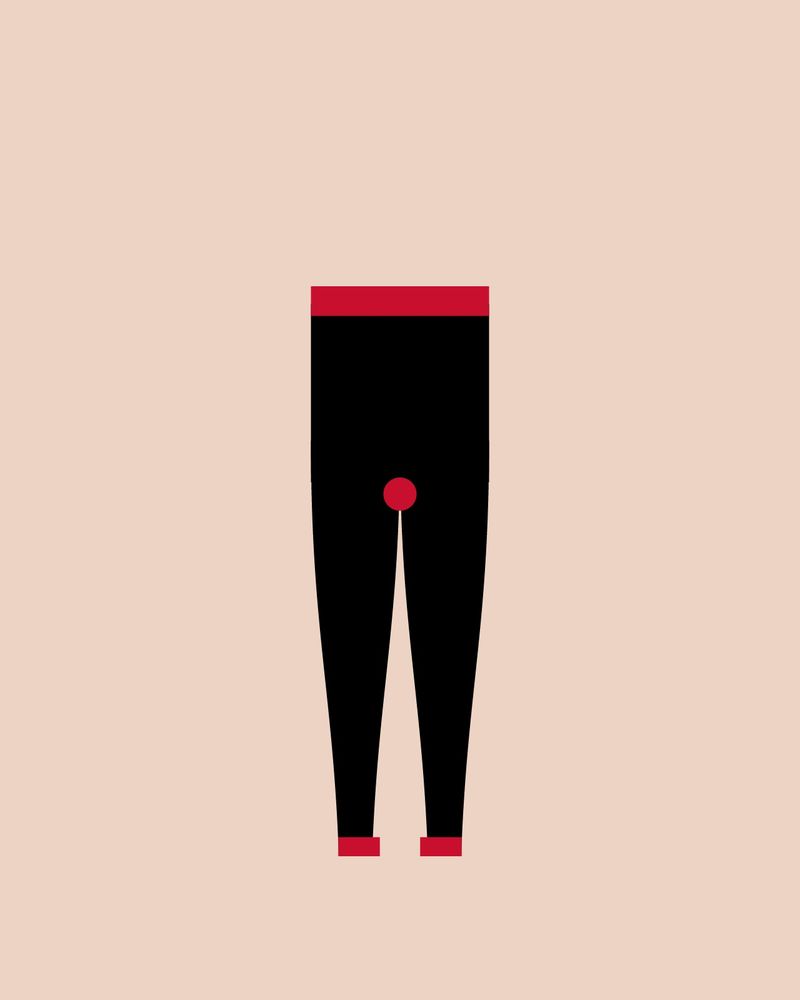
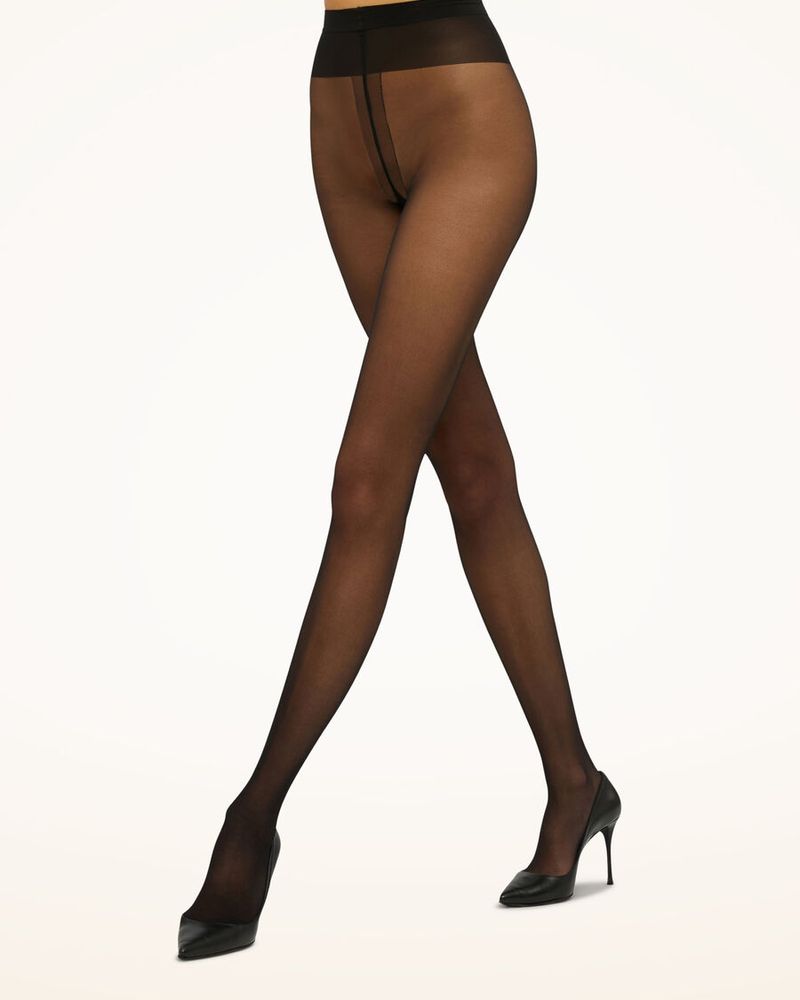
A pair of tights has seven parts: the waistband, the panty section (or brief), the gusset at the crotch, two legs, the heel, the toe and the seams that join them. The gusset adds room and breathability, the toe is where tights wear out first, and the panty section can be reinforced, control or sheer.
Each part has a job, and most of what separates a good pair from a bad one is in these details, not in the denier. This guide goes from top to toe, shows a real example from Wolford's product page and explains what to look at on the packet.
What are the parts of tights?
| Part | What it does | What to look at |
|---|---|---|
| Waistband | Holds the pair at the waist | Soft and wide, so it does not roll |
| Panty section | Joins the legs; can reinforce or shape | Reinforced, control or sheer to waist |
| Gusset | Gives room at the crotch | Flat, ideally cotton or cotton-lined |
| Legs | The knit you see | Denier, fibre, finish |
| Heel | Where the foot meets the shoe | Whether it is reinforced |
| Toe | The point of most friction | Reinforced or sandal |
| Seams | Join the parts | Flat is more comfortable |
Waistband
The waistband is the top edge of the tights. Our glossary notes that a comfortable waistband matters as much as the firmness of the control, and that choosing your usual size, rather than sizing down, helps stop the waist from rolling. Low-rise and wide comfort waistbands change how tights sit on the hips. In the way the pair is made, an elasticated band is sewn around the top once the two legs have been joined.
Panty section
The panty section, also called the brief or body, runs from the waist to the top of the thigh. It comes in three versions, as the glossary explains: reinforced, in a heavier yarn for durability; control, for shaping the tummy, hips and bottom; or sheer to waist, in the same fine knit as the leg, so no line shows under light or short clothes. A control top is a brief section knitted with a denser, firmer structure, often with extra elastane.
Gusset
The gusset is the panel sewn into the crotch where the two legs meet. It adds room and freedom of movement, improves fit and reduces strain on the seams. Many models use a cotton gusset, or one lined with cotton, for breathability and comfort against the skin. A flat, well-finished gusset is a small sign of quality worth checking before you buy.
Legs
Each leg is a knitted tube. According to the Knitting Together museum of the UK hosiery industry, rows of circular knitting machines produce the individual legs, and the machine's needles and cams shape them, particularly at the heel. The knit, the yarn and the fibre decide how sheer, soft and elastic the leg is.
Heel
The heel is shaped by the knitting machine itself: the Knitting Together museum notes that needles and cams control the shaping, particularly at the heel. On the packet it matters for one reason: a heel with reinforcement should land on your heel. Our size guide notes that if the reinforced heel rides above your own heel, the tights are too short.
Toe
The toe is where tights wear out first, and the choice between two versions depends on your shoes. The reinforced toe is knitted with a heavier or double yarn to resist friction from shoes and holes: it is the everyday choice for closed shoes and boots, at the cost of a visible band. The sandal toe is knitted in the same sheer yarn as the leg, so nothing shows in open shoes, but it is more delicate. Wolford's Individual 10 uses a third option, an "almost invisible toe reinforcement", which the brand calls Shadow Toe.
Seams
On a modern pair the seams are the toe closure and the join at the crotch. At the Knitting Together factory line the toe is closed by a machine that stitches it and cuts off the excess fabric, and the two legs are joined later by a sewing head. A flat or hand-linked seam is the kind you will not feel inside the shoe, as we note in the buying tips of our Fogal history. Stockings with a seam up the back are a different story: today the seam is mostly decorative, a seamed stocking detail often paired with a Cuban heel.
A real example: Wolford Individual 10
Wolford's product page lists the parts of the Individual 10 almost like a checklist: double-entwined elastane, a reinforced panty section, a cotton gusset, an almost invisible toe reinforcement and a soft waistband.
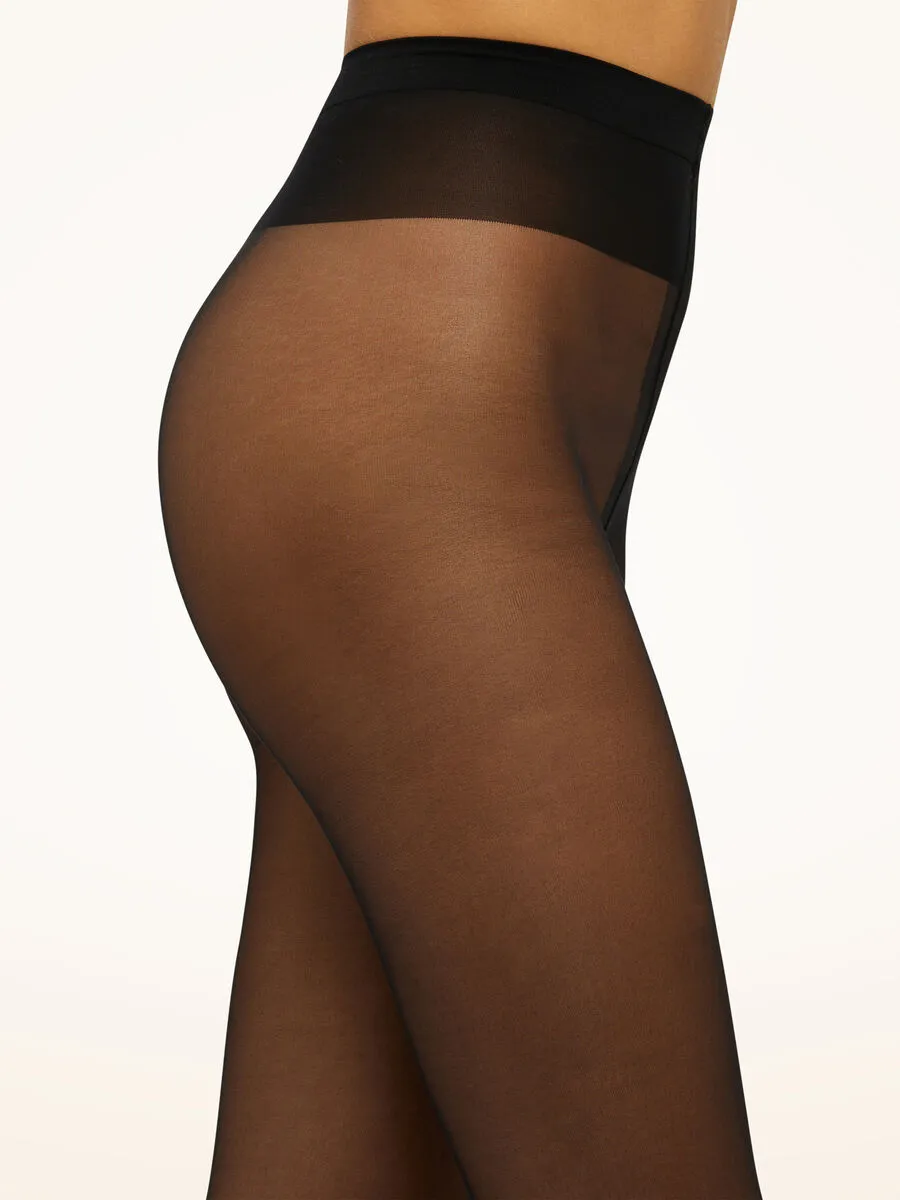
The waistband and the reinforced panty section of the Individual 10. Photo: Wolford.
How are tights made?
The Knitting Together page describes the line in this order: the legs are knitted on circular machines, the toe is closed by a toe-seaming machine, the legs are dyed, joined by a sewing head, finished with the waistband, inspected, and some pairs are heat-shaped before packing. Mills differ in the order of steps, but the parts you see on the packet come from there.
What should you check before you buy tights?
- Read the size chart first: size decides whether the heel and toe land where they should.
- Match the toe to the shoe: reinforced for closed shoes, sandal toe for open ones.
- Look for a flat gusset, a soft waistband and a flat seam at the toe.
- For fibres and the label, read what tights are made of.
In short
- Seven parts: waistband, panty, gusset, legs, heel, toe, seams.
- The toe and the gusset are where fit and wear are decided.
- Reinforced toe for closed shoes, sandal toe for open ones.
- Sizes that are too short push the reinforcements out of place.
Frequently asked questions
What are the parts of a pair of tights?
A pair of tights has a waistband, a panty section (also called the brief or body), a gusset where the legs meet, two legs, a heel, a toe and the seams that join them. Our glossary and the manufacturers' product pages name each one.
What is the gusset in tights?
The gusset is the panel sewn into the crotch where the two legs meet. It adds room and freedom of movement and reduces strain on the seams. Many styles use a cotton or cotton-lined gusset for breathability.
What is the difference between a reinforced toe and a sandal toe?
A reinforced toe is knitted with a heavier or double yarn to resist friction and holes, and is the everyday choice for closed shoes and boots. A sandal toe is knitted in the same sheer yarn as the leg, with no reinforcement, so nothing shows in open shoes, but it is more delicate.
What does the panty section do?
It is the upper part of the tights, from waist to top of the thigh. It can be reinforced for durability, control for shaping, or sheer to waist, in the same fine knit as the leg so no line shows under light or short clothes.