What are tights made of? Nylon, elastane, wool and cotton explained
Polyamide and elastane in most pairs, wool, cotton and polyester in the rest: what each fibre does, what real labels say and how to read them before you buy.

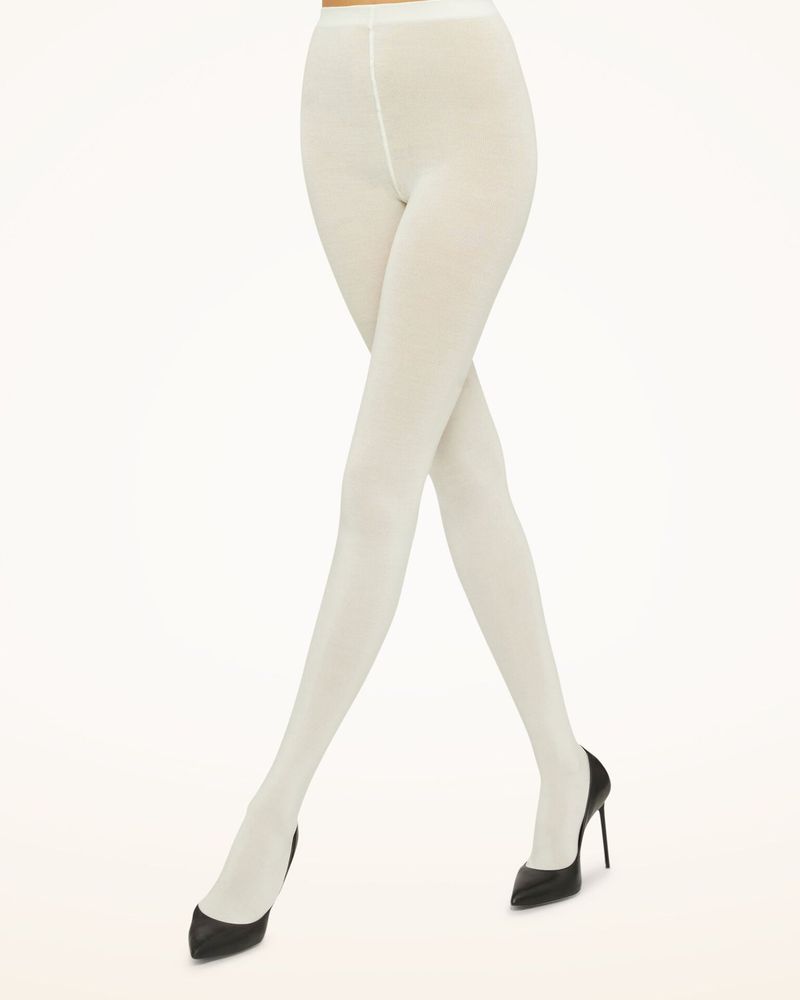
Tights are mostly made of two fibres: polyamide, better known as nylon, and elastane. Polyamide gives the knit strength and body; elastane gives stretch and recovery. A typical pair is around 85% polyamide and 15% elastane. Warmer or softer styles add wool, cotton or polyester, but some synthetic fibre almost always stays in the blend.
The split between polyamide and elastane decides how a pair fits, how it looks and how long it lasts. Wool, cotton and polyester appear in the pairs designed for warmth or comfort. This guide goes through each fibre, shows real compositions from brand pages and explains how to read the label. The number on the pack that tells you how sheer a pair is, the denier, measures the yarn, not what it is made of.
What are most tights made of?
A pair of tights is usually around 85% polyamide and 15% elastane. That is the figure given by an Italian environment ministry profile of the Life Re-Tights recycling project, which we covered in our piece on how tights are recycled. Brands vary around it:
| Product | Composition | Source |
|---|---|---|
| Oroblù Bio-Derived Sneakers Tights | 94% nylon, 6% elastane | Oroblù's label |
| Calzedonia Sheer-Effect Thermal, outer layer | 85% polyamide, 15% elastane | Calzedonia product page |
| Wolford Merino Tights | 49% polyamide, 49% virgin wool, 2% elastane | Wolford product page |
The three rows show how wide the range is: in these examples elastane goes from 2% to 15% of the pair.
Are tights made of nylon?
Polyamide is the fibre that built modern hosiery. Nylon was first made by Wallace Carothers at DuPont in 1935, and nylon stockings went on sale to the general public in May 1940, when women lined up in shops to buy them. In our glossary we note that it replaced silk in women's stockings around 1940, thanks to its strength, elasticity and low price.
On a European label you will not see "nylon" alone. EU Regulation 1007/2011 defines the fibre as "polyamide or nylon", and either name may appear. For the shopper they are the same thing.
Not all polyamide comes from oil. Swedish Stockings makes tights from ECONYL, a regenerated nylon yarn produced by Aquafil from nylon 6 waste, including fishing nets, which is broken back into its building blocks and spun again; we explain how in our Swedish Stockings article. Oroblù's corn-based tights use a nylon with about 46% bio-derived content.
What is elastane, or LYCRA?
Elastane is the fibre that lets tights stretch to the leg and come back. It was invented in 1958 by Joseph Shivers, a chemist at DuPont, and The LYCRA Company says it can stretch up to 500% of its length and return to shape over and over. The same company dates its arrival in hosiery to 1978, when it says it eliminated sagging and bagging.
The EU regulation defines elastane as a fibre made of at least 85% segmented polyurethane which, stretched to three times its length and released, recovers quickly to its original size. In North America it is called spandex. LYCRA is a trademark of The LYCRA Company for its own elastane, so many packs say Lycra, but not all elastane is Lycra. Our glossary has the entry.
Elastane is also the heart of the 3D knit, in which the fibre is worked into every row so the tights stretch evenly in length and width.
Microfibre, wool, cotton and polyester
The same two fibres can be spun in different ways and mixed with others.
- Microfibre. A yarn of very fine filaments, usually polyamide, that makes a soft, smooth fabric with a velvety touch. It is used mainly in opaque and semi-opaque tights; see the microfibre entry.
- Wool and merino. They add warmth without bulk and breathe well. Wolford's Merino Tights mix 49% virgin wool with 49% polyamide, and Falke presents its Softmerino with soft merino wool on the outside and cotton against the skin.
- Cotton. It shows up where the skin needs it most: Wolford lists a cotton gusset on its Individual 10 tights, and the gusset is often cotton or cotton-lined for breathability. See the anatomy of tights for every part of a pair.
- Polyester. It appears in fleece and double-layer tights. Calzedonia's Sheer-Effect Thermal has an inner layer of 92% polyester and 8% elastane, and Oroblù's Thermo-Nude is 53% polyester, 31% polyamide and 16% elastane. We compare them in our thermal tights guide.
- Silk and cashmere. Our buying tips in the Fogal history suggest wool and cashmere for winter, silk and cotton for the shoulder seasons, but read the composition: Lingerie Briefs points out that many so-called cashmere tights contain only a small share of it.
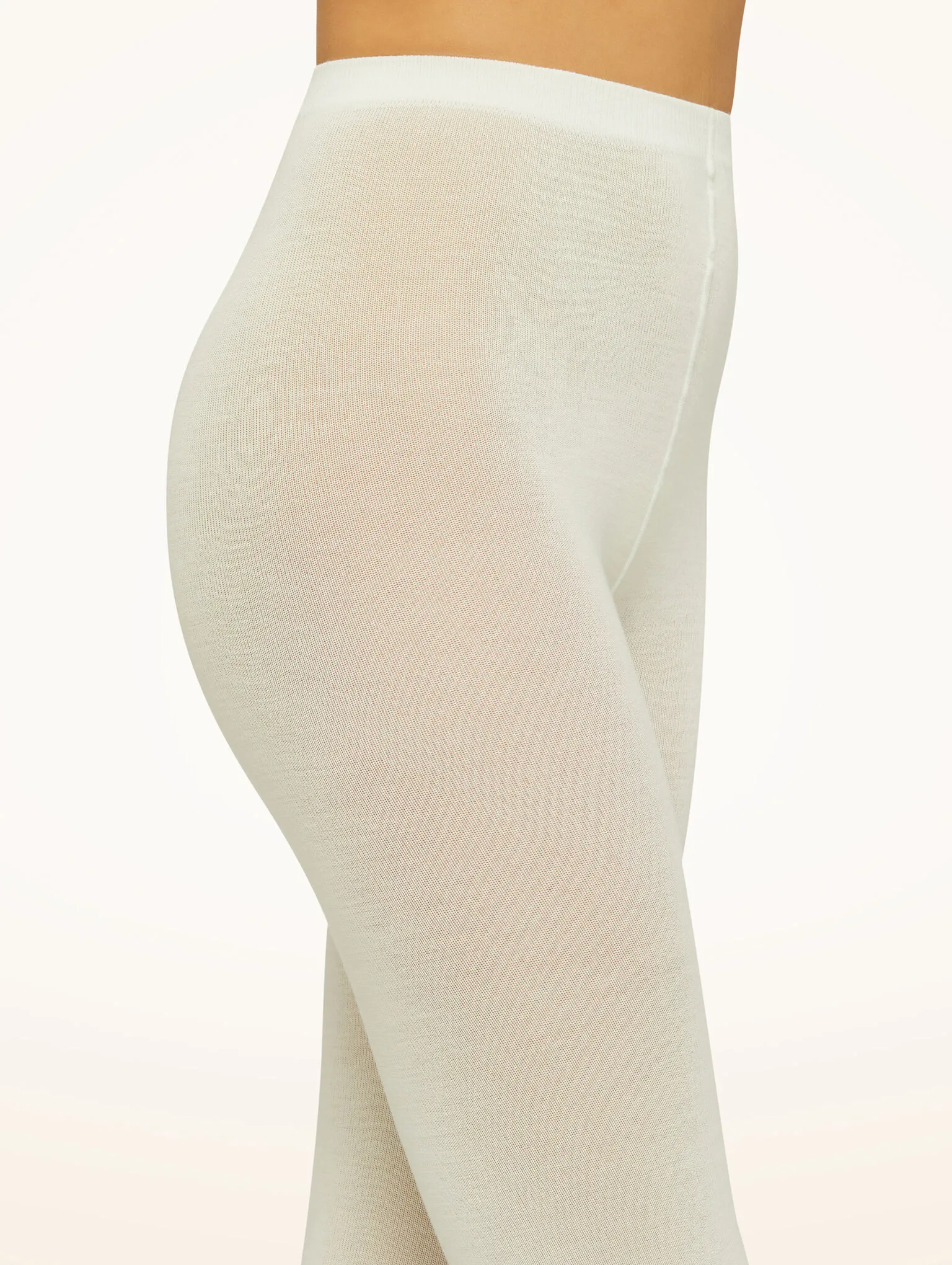
The knit of the Merino Tights, 49% polyamide, 49% virgin wool and 2% elastane. Photo: Wolford.
How do you read the label on tights?
The European rule is simple. A textile product sold to consumers must carry a label that is durable, legible, visible and accessible, listing every fibre by name and percentage by weight, in descending order. So "94% polyamide, 6% elastane" means the polyamide weighs more.
Three practical consequences:
- Brand names are not fibre names. LYCRA and ECONYL are names for particular yarns. The label has to use the fibre's legal name, such as elastane or polyamide, so look for those words.
- The percentages matter more than the claim. Oroblù's "corn" tights have a nylon that is 46% bio-derived and an elastane that is 70% bio-derived, but the elastane is only 6% of the pair, so the plant-derived share of the whole is under half.
- Wool or cashmere on the front of the pack is not the same as wool in the pair. Check the numbers.
94% polyamide, 6% elastane: what it means
It is one of the most common lines on a pack, and it is the composition of Oroblù's corn-based Sneakers tights. Read it like this:
- The order is by weight. The EU rule lists fibres from the heaviest to the lightest, so 94 parts in every 100 grams of the pair are polyamide and 6 are elastane.
- The small number does the stretching. Polyamide makes the knit, elastane lets it follow the leg and spring back. Even at 6%, the elastane is what stops a pair from bagging at the knees.
- Compare it with the range. In the examples in this guide, elastane goes from 2% (Wolford Merino) to 15% (the outer layer of Calzedonia's thermal pair). A 6% pair sits towards the lower end.
- It says nothing about sheerness. The composition tells you what the yarn is made of, not how thick it is: for how see-through a pair is, read our denier guide.
What does each fibre do?
| Fibre | What it gives | Where you find it |
|---|---|---|
| Polyamide (nylon) | Strength, elasticity, low price | Almost every pair |
| Elastane (LYCRA) | Fit, shape retention, resistance to bagging | Almost every pair |
| Microfibre | Softness, warmth, resistance to pilling | Opaque and semi-opaque tights |
| Wool, merino | Warmth without bulk, breathability | Winter and thermal styles |
| Cotton | Comfort and breathability against the skin | Gusset, lining, some whole pairs |
| Polyester | Fleece and double-layer warmth | Thermal tights |
Why composition matters for the planet
Because polyamide and elastane are knitted together, a pair of tights is very hard to recycle. The Italian ministry's profile says blended-fibre fabrics need technology that does not compromise performance, which is the problem the EU-funded Life Re-Tights project is trying to solve with a solvent process. We follow it in our article on Calzedonia's recycling project.
In short
- Most tights are polyamide and elastane. A typical split is 85/15, but the examples above run from 2% to 16% elastane.
- Nylon and polyamide are the same fibre; LYCRA is a brand of elastane.
- The label lists fibres by weight in descending order: read the numbers, not the headline.
- Wool, cotton and polyester appear in warm and comfort-oriented pairs.
- For how sheer or thick a pair looks, read the denier guide next.
Frequently asked questions
What are tights made of?
Most tights are made of polyamide (nylon) and elastane. The polyamide gives the knit its strength and the elastane gives stretch and recovery. Warmer or special styles add wool, cotton or polyester. A typical split is 85% polyamide and 15% elastane, the figure used by an Italian environment ministry profile of the Life Re-Tights recycling project.
Are tights made of nylon?
Usually yes. Nylon is the common name of polyamide, the fibre that replaced silk in women's stockings around 1940. On a European label the fibre is written as polyamide or nylon, and it is almost always blended with elastane.
What is the difference between nylon, polyamide and elastane?
Nylon and polyamide are the same fibre family under two names. Elastane, called spandex in North America and sold by The LYCRA Company as LYCRA, is a different fibre: it stretches and springs back, which nylon cannot do on its own.
Are there tights made of natural fibres?
Yes, but they are the minority. Wolford's Merino Tights, for example, are 49% polyamide, 49% virgin wool and 2% elastane, and Falke describes its Softmerino with merino wool on the outside and cotton against the skin. Even then some synthetic fibre stays in the blend.
Why are tights so hard to recycle?
Because the two main fibres are blended in one yarn. A 2025 profile by the Italian environment ministry puts tights at around 85% polyamide and 15% elastomer, and separating them takes a chemical process, which is what the EU-funded Life Re-Tights project is testing.