How to stop tights from laddering: 10 tips that actually work
From the size to the wash, from how you put them on to how you store them: ten concrete habits to make tights last, plus a true-or-false on the old remedies, from the freezer to clear nail polish.
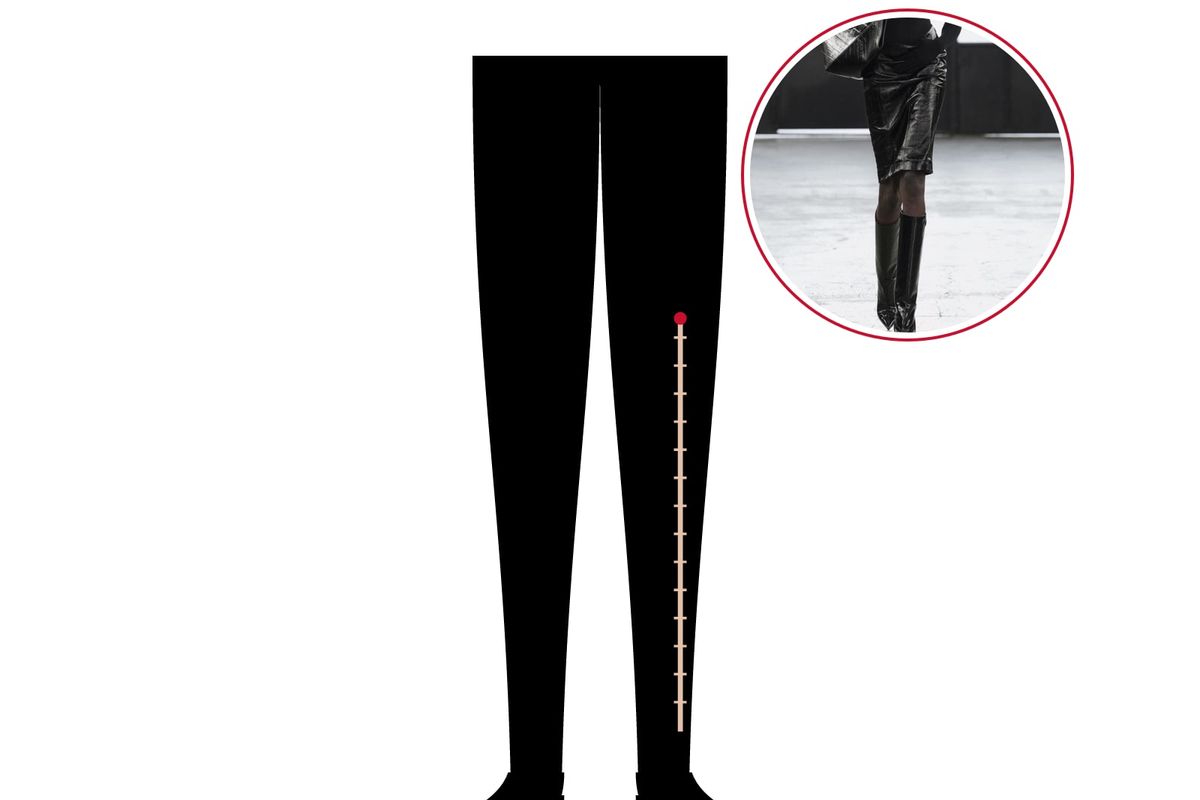
Tights ladder when one loop breaks and the loops beside it, no longer held, unravel in a vertical line: that light stripe running down the leg is the ladder. Almost always we break the loop ourselves, with a nail, a ring, the edge of a shoe, a wrong wash. The good news is that most ladders can be avoided with ten habits, none of which costs anything.
What does "laddered tights" mean?
Laddered tights are tights with a ladder: the vertical stripe left when a loop breaks and the loops above and below it come undone. The word is British and comes from the look, a column of open loops crossed by the horizontal threads that are left, like the rungs of a ladder. In American English the same thing is a run, and tights that have one have "a run in them". A snag is the step before: a pulled loop that has not broken yet. Caught early, a snag can be eased back into the knit; once the loop breaks, it becomes a ladder.
1. The right size
Tights that are too small are tights under tension: every loop works at its limit and it takes nothing to break one. Sizes are chosen by height and weight, and every brand has its own chart; when in doubt between two sizes, the larger one is the better bet, as Snag, which makes tights in every size, also advises: "if you're between sizes, size up". The glossary explains how to read the charts.
2. Nails filed, rings off
Fingernails catch the tights as you put them on, toenails pierce them from the toe. Filing them, not just cutting them, removes the sharp edges. Rings, bracelets and watches come off first: the specialist retailer The Tight Spot, in its care instructions for Wolford tights, recommends "ensuring jewellery is removed before handling to avoid snags".
3. Moisturised hands and legs, but dry
Dry skin has tiny rough patches that catch the yarn; a cream on hands and legs, left to absorb, makes everything smoother. Snag suggests "moisturising feet and legs before wearing". Do not put tights on while the cream is still wet: the yarn soaks it up and stains.
4. Roll, do not pull
This is the gesture that makes the biggest difference. Roll the tights from the waistband down to the toe, like a doughnut, slip the foot in, settle the heel and unroll up the leg a little at a time, with your palms and not your fingers. Then the other leg. Only at the end bring the waistband up. Pulling from the waistband to settle everything at once is the surest way to open a loop. The Wolford instructions reported by The Tight Spot say the same: "roll the tights slowly from the feet upwards".
5. Check your shoes
The inside of a shoe can have a hard seam, an exposed heel nail, a dry leather edge: all things that scrape the tights at every step. A pass with your hand inside the shoe, before putting it on, finds the problem. The same goes for the broken heel of a pump and for the zips of ankle boots: a sheer inside an ankle boot ladders right on the edge.
6. Watch where you sit and what you carry
Wicker chairs, rough wooden benches, table edges, studded bags or velcro fastenings, a belt buckle: the list of things that catch tights is long. It is not about living in fear, but about knowing that a bag resting on your knees or the edge of a chair are the points where ladders are born.
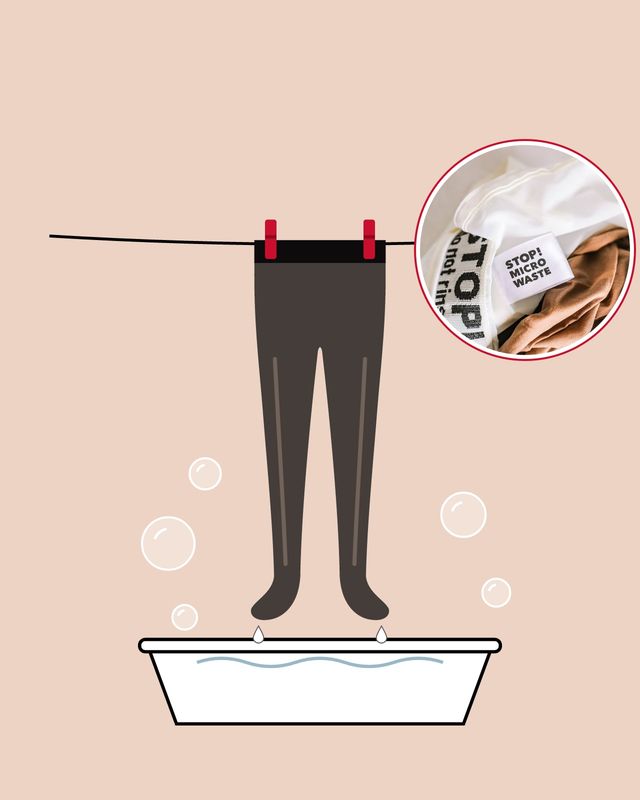
7. Wash them the right way
A wrong wash weakens the elastane and the tights ladder more easily the next time. The rules are few and shared by the makers. Wolford, according to The Tight Spot, recommends hand washing "in lukewarm water with a mild detergent" or the machine "in a lingerie bag, at a temperature no higher than 30°C"; Snag suggests "a 30°C wash with similar colours in wash bags or pillowcases". The Calzedonia and Oroblù labels on their thermal tights say "hand wash, maximum temperature 40°C", no bleach and no tumble dryer. In short: by hand or in a bag, lukewarm water, mild detergent, no fabric softener, which leaves a film on the yarn.
8. Dry them without heat
Never in the tumble dryer: heat cooks the elastane. Wolford, again according to The Tight Spot, warns that in the dryer tights "will shrink and might tear", and that the heat "will damage the luxury yarns" and shorten their life. Squeeze them gently inside a towel and lay them flat or hang them, away from radiators and direct sun. Snag: "using any form of heat can really degrade the stretch".
9. Store them apart
A drawer where tights lie loose is a drawer where they catch on each other, fishnets and patterns above all. Rolled one by one, sorted by density, in a box or a bag: Snag advises "keeping tights rolled or folded in a drawer when not wearing". Fishnets go with fishnets, as our guide to fishnet tights explains.
10. More denier, more pairs
An 8-denier sheer is an extremely thin yarn: it will last less than a 20 denier, and much less than a 60-denier opaque. It is not the tights' fault, it is physics. For everyday wear it pays to go up to 15 or 20 denier, as the denier guide explains, and to buy two identical pairs: the second is the spare for the day the first ladders, and with two pairs of the same style you can rescue the undamaged legs in an emergency.

The 2016 CHOICE/RMIT test: ten opaques ranked by ladder resistance, with the price per pair. The most expensive comes last.
What does "ladder resist" mean?
"Ladder resist" or "ladder-resistant" on a packet is a maker's claim, not a standard with a test behind it. It means the tights are built so that a broken loop is less likely to run down the leg. Brands get there in two main ways. The first is to fuse the elastane to the yarn with heat, so that the loops hold each other: the Australian consumer group CHOICE calls it Lycra fusion and notes that it stops laddering "but this won't always prevent snagging"; Heist, which sells its sheers with what it calls anti-snag fusion, says the heat "sets an elastane film through the knit, so a catch holds where it is instead of running to the toe". The second is a double-covered yarn, an elastane core wrapped twice, which is harder to break in the first place.
Denier is only part of the story. In the CHOICE test of ten opaques, run with the textile testing unit of RMIT University in 2016, the unit's manager Trudie Orchard put it plainly: "The denier of the yarn in the tights is only one aspect that would impact on the laddering results – knit construction and finish also plays a part in the performance." In practice, ladder resist means fewer ladders and shorter ones, not tights that never ladder: the ten habits above still apply.
True or false: the old remedies
- The freezer strengthens them. Not proven. The remedy is to wet the tights, put them in a bag and leave them overnight in the freezer. Snag, which looked into it on its blog, writes that "there are a lot of opinions about whether freezing tights actually works - some people swear by it, others say it's a load of rubbish", and the proposed explanation, fibres "firmed" by the cold, has no independent verification. It does no harm, but there is no reason to expect sturdier tights.
- Clear nail polish stops a ladder. True, for a day. A drop at each end of the ladder locks the loops and stops it from unravelling further. It is an emergency fix, not a repair: at the next wash the polish comes off. Hairspray works the same way, but it stiffens the yarn around it.
- Washing before first wear. Recommended. Snag suggests "a hand wash using non-aggressive detergent before first wear": it removes production residues and settles the loops.
- More denier, more resistance. True, with one caveat: resistance depends on the yarn and the knit, not only on the number. A well-made 20 denier outlasts a poor 30.
- Wetting them before putting them on. False: damp tights pull more, not less.
How to fix a ladder in tights
The honest answer is that a ladder in fine tights cannot be repaired at home: it can only be stopped. What to do depends on the tights.
- On a sheer. A drop of clear nail polish at each end of the ladder, on the inside, locks the loops. Heist describes it the same way: "a stopgap, not a repair". Hairspray works in an emergency, but it stiffens the yarn around it. Let it dry before you move.
- On a snag that has not run yet. Do not cut the pulled loop: stretch the fabric gently around it, crosswise and lengthwise, until the loop eases back into the knit.
- On opaques and wool tights. A small hole caught before it runs can be closed from the inside with a few stitches in a matching thread. On a thick opaque it hardly shows.
- Where it is matters. A ladder high on the thigh, under a skirt, or at the toe, inside a closed shoe, can carry on for a few more wears. One on the shin cannot.
The real fix is the one from tip 10: two identical pairs, so that when one leg goes, the good legs of the two pairs can still make one.
When they are laddered anyway
Laddered tights are not necessarily tights to throw away. Under trousers, inside a tall boot or under opaques, a laddered leg does not show. And when they are really done, they belong in the right recycling: tights are almost all polyamide and elastane, two fibres that are hard to separate, and that is exactly what the Life Re-Tights project by Golden Lady and Calzedonia works on.
In short
- The right size and, when in doubt, the one up.
- Nails filed, jewellery off, skin moisturised and dry.
- Roll them to the toe and unroll with your palms, never pull from the waistband.
- Shoes checked inside, care with chairs, bags and zips.
- By hand or in a bag at 30 degrees, mild detergent, no dryer.
- Store them rolled and apart; go up in denier for daily wear.
- "Ladder resist" means fewer, shorter ladders, not none; clear nail polish stops a ladder for the day.
The other guides, from deniers to the right colour with a black dress, are gathered in the complete guide to tights.
Frequently asked questions
What does ladder resist mean on tights?
It is a maker's claim, not a standard: the tights are built so that a broken loop is less likely to run down the leg, usually with elastane fused to the yarn by heat or with a double-covered yarn. It means fewer and shorter ladders, not tights that never ladder.
How do you stop a ladder in tights from getting bigger?
Put a drop of clear nail polish at both ends of the ladder: it locks the loops and stops the run for the day. Hairspray works in an emergency. It is a stopgap, not a repair, and it comes off at the next wash.
Can you fix laddered tights?
Not invisibly. On a sheer you can only stop the ladder from spreading. On thick opaques or wool tights a small hole caught early can be closed from the inside with a few stitches in a matching thread.
What is the difference between a ladder and a run?
None: they are the same thing. Ladder is the British word, run is the American one. Both describe the vertical line left when one loop breaks and the loops beside it unravel.
Do more expensive tights ladder less?
Not necessarily. In the 2016 CHOICE test with RMIT's textile lab, some of the cheaper pairs outperformed one of the most luxurious brands: knit construction and finish count as much as the denier and the price.