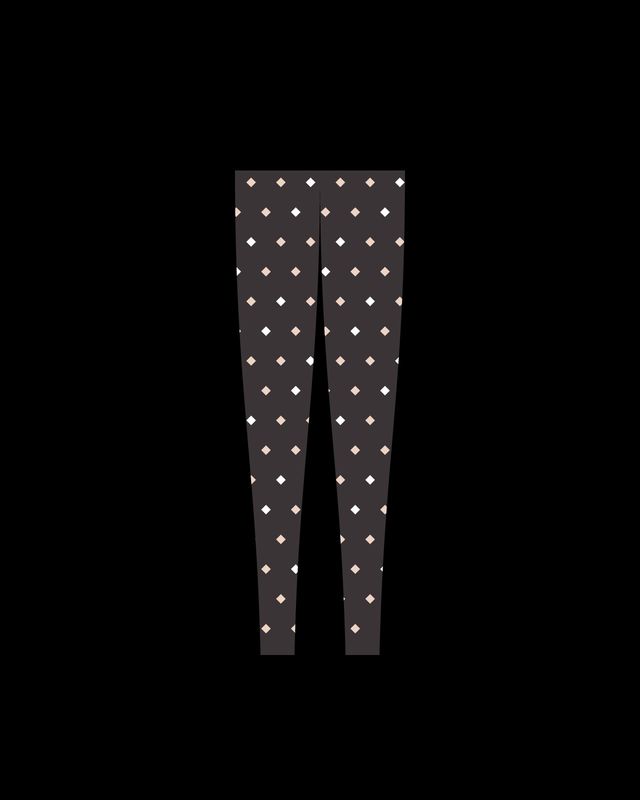
Polka-dot tights: from the FW26 runways to your wardrobe
Micro-dots at Caro Editions in Copenhagen, a flash of cobalt at Jil Sander, cashmere at The Row: why winter 2026 is being decided from the knee down.
For years we bought tights the way we buy light bulbs: black, sheer and ideally invisible. The autumn/winter 2026 shows turned that on its head. In Copenhagen in January, Caro Editions sent out models in chocolate, white and black tights scattered with micro-dots; in Milan, Jil Sander broke up its sober looks with a flash of cobalt at the ankle; in Paris, The Row finished coats and skirts with sheer grey and black. The shared message is plain enough: tights are no longer the backdrop to an outfit. They are its punctuation.
Copenhagen, January: Caro Editions' micro-dots
For hosiery, the season began before New York. On 27 January 2026 Caroline Bille Brahe showed Caro Editions' autumn/winter collection in Copenhagen, a show Vogue Scandinavia framed around excess, handwork and irreverence. The Danish former model summed it up herself:
There is always a bride. And always a little excess. A bit of a f*** you. That's how you know it's couture. — Caroline Bille Brahe, to Vogue Scandinavia
Within all that excess, the legs were not an afterthought. Who What Wear described each model as looking as though she had taken "a nose-dive into an '80s dressing-up box", emerging in lace, bows, shoulder pads, silky bodysuits and "tights in various shades of chocolate brown, white and black with all-over micro polka dots". The finale was a bride in upcycled transparent lace and silk ribbon, a Miss Havisham with a sense of humour.
Caro Editions had company. The same week, Paolina Russo showed footless tights, lacy leggings and pastel ankle warmers; Forza tinted legs icy blue and pillar-box red beneath billowing evening skirts; Baum und Pferdgarten matched purple tights to a head-to-toe violet look. Vogue Scandinavia's round-up of Copenhagen's 1980s mood also counted lace tights, stirrup leggings and the occasional bold polka dot. Who What Wear's verdict: "the tights and hosiery were not a second thought in these looks; moreover, they complemented or made them entirely." Its list of takeaways from the week reads like a shopping brief for the season ahead: polka dots, block colours, demi-sheer and knee-high hosiery.
Milan and Paris: Jil Sander's blue, The Row's cashmere
In Milan in late February, Simone Bellotti showed his second collection for Jil Sander in a sunken, burnt-caramel conversation pit. Coveteur noted flesh-toned leather coats worn with grey tights and, above all, "the flash of a cobalt blue sock" cutting through monochrome brown, grey and black. Other outlets called them blue tights; the effect is the same either way. At a house built on restraint, a single block of colour at the leg is enough to change the whole register of a silhouette.
The Row, in Paris, took the opposite line. According to Who What Wear's show review, many looks were finished with pointed court shoes and sheer black or grey tights, a ladylike note under skirts and coats. But the Olsens' label had already set the hosiery conversation with its Resort 2026 collection, in which thick cashmere tights stood in for shoes in nearly half the looks. No surprise, then, that one Who What Wear editor's autumn trend list boiled the season down to three ideas: white polka dots at Caro Editions, vibrant blue at Jil Sander and ribbed cashmere at The Row. Three dialects, one sentence: the leg is a design space again.
A short history of the spot
The polka dot's origins are less obvious than they look. As Mental Floss explains, the name comes from the polka, the dance that became a full-blown craze in the 1840s and lent its name to all manner of merchandise. The earliest known use of "polka dot" appeared in Godey's Lady's Book in 1857.
Decorated legs go back much further. The FIT Fashion History Timeline notes that "clocking has been used in hosiery since the 16th century": knitted or embroidered motifs at the ankle. By the late 18th century fashionable stockings in silk or cotton were generally white and often adorned with clocks in metallic thread. The term faded after the 19th century, but the idea of pattern on the leg never really went away.
The decisive shift came with modern tights. Mary Quant did not invent them, but in the 1960s she made them essential, pairing short tunic dresses with tights in "scarlet, ginger, prune and grape", as the V&A puts it. The museum's collection holds an object that could have been made for this season: a pair of nylon tights "with a polka dot pattern", designed by Quant, made by the Nylon Hosiery Company around 1975 and sold as "Dotty". Caro Editions' micro-dots have a clear ancestor, and it lives in a museum.
Why now
The revival did not start on the runway. In autumn 2024 The Zoe Report noted that Kendall Jenner had gone viral on Instagram in transparent polka-dot tights from a Calzedonia campaign, and that Kaia Gerber had worn Wolford dotted tights on a nude base under a little black Marc Jacobs dress. From there the dot moved from red carpet to rail: Wolford's Holiday 2026 collection promises crystals and metallic polka dots. The FW26 shows simply stamped their approval on a desire that had been building for two seasons.
There is a practical logic too. Tights are the cheapest way to update a wardrobe: they cost a fraction of a coat, work with what you already own and change how you read a black dress you have had for years.
How to wear them, and what to check before you buy
Start with scale. Micro-dots like Caro Editions' read almost as texture from a distance and hold up in daylight. Large, widely spaced dots are an outright pattern and need a simple outfit around them.
Then the base. A few formulas that work:
- Black base, small dots: the easiest version, office-friendly with a midi skirt or tailored dress.
- Nude or sheer base: lighter and closer to skin, as on Kaia Gerber; best with a short little black dress.
- Brown or coloured base: the fashion route, straight from Copenhagen. Go tonal, with shoes and bag in the same colour family.
- One hero per outfit: if the tights are spotted, skip prints on the skirt or bag.
- Dark, closed shoes: courts, loafers or ankle boots frame the pattern; a sandal interrupts it.
In the shop, look at construction as well as pattern. Dots can be knitted in, applied, or created by a net structure, as with Wolford's Dotted Net Tights, and each behaves differently in sheerness and durability. The simplest test: gently stretch one leg under the light. If the dots turn oval in your hands, they will do so even more on the leg. With sheers, a low denier shows off the pattern but forgives little; for everyday wear, a semi-opaque around 30 to 40 denier is a sensible compromise. A reinforced heel and a comfortable gusset matter more than you think, because patterned tights get noticed, and so do their wrinkles.
If spots still feel like a step too far, The Row offers the perfect escape route: no motif at all, just a thick, beautiful yarn. But anyone who saw those chocolate micro-dots in Copenhagen knows where this is heading. Mary Quant's "Dotty" tights waited half a century for a second act, and it has arrived.