How to stop tights rolling down: why the waistband slips, and 8 fixes that work
Tights that roll down at the waist or slip towards the knees are almost always the wrong size or the wrong waistband. Here are the causes, how to tell which one is yours and the fixes that work.
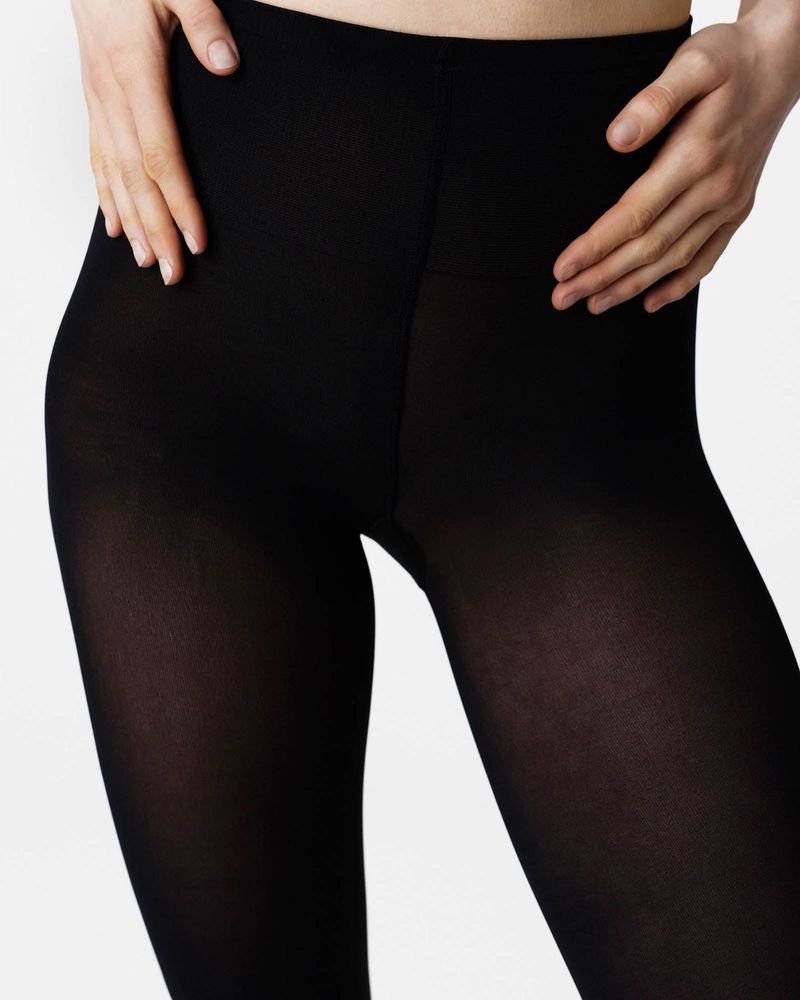
Few things ruin a day like tights that slowly roll down at the waist, or slip a few centimetres every hour until the gusset is halfway down your thighs. It is tempting to blame yourself, or the brand. Most of the time, though, the cause is one of four simple things, and each has a precise fix.
This guide goes through the causes, shows you how to tell which one is yours, and gives eight fixes that work, from the size chart to how you put the tights on.
Why tights roll down: the four causes
1. The body is too short. Tights are sized for leg length and for the height of the panty section. If the body is too short for your torso, the fabric is always under tension between waist and crotch, and the waistband gets pulled down, as Commando, the American hosiery and underwear brand, puts it: "If the torso is too short, the tights will constantly pull down from the crotch." You notice it because the gusset never reaches the crotch, however much you pull.
2. The waistband is too tight. A narrow, tight elastic squeezes instead of holding. When you sit or bend, the fabric above it has nowhere to go and folds over, then the fold rolls down. Commando explains that tight elastic "is designed to compress, which often forces the fabric to fold and roll when you sit or move". It also happens with control-top tights bought a size smaller to feel more held in: our glossary warns that sizing down tends to make the waist roll.
3. The tights are too big. The opposite problem: the waistband is loose and gravity does the rest. Heist, the British tights brand, writes in its size guide: "If the waistband is succumbing to gravity, you may need to size down." The tell-tale signs are fabric bunching at the ankles and knees, and a waistband that, pulled up, reaches almost to the chest.
4. The elastic is tired. After many washes, hot water or a tumble dryer, the elastane in the waistband loses its grip. If a pair that used to stay up now slides, the size is not the problem: the pair is at the end of its life.
Two things make all of these worse: bulky underwear under the tights, which pushes the waistband out of place, and very sheer, low-denier fabrics, which have less structure than an opaque and roll more easily.
How to tell which one is yours
| What you notice | Probable cause | Fix |
|---|---|---|
| The gusset sits low between the thighs, the waistband rolls down when you sit | Body too short | Size up, or a brand with a taller size for your height |
| The waistband digs in and leaves a mark, then folds over | Waistband too tight | Size up, wide soft waistband, no control top |
| The waistband slides down loosely, fabric bunches at the ankles | Tights too big | Size down |
| An old pair that used to stay up now slips | Worn elastic | Replace the pair |
| It happens only with certain knickers or under certain clothes | Bulky layer underneath | Flat, seamless underwear |
8 fixes that work
1. Read the size chart, not the letter
Every brand has its own chart, and the same S or 2 can mean different heights and weights. Calzedonia, for example, reads its sizes from height and weight together; Heist suggests measuring your favourite jeans at the waist and hip. Our tights size chart puts the main brands side by side and explains how to read them.
2. Between two sizes, take the larger one
It is the most common advice from the brands. Snag writes it plainly: "if you're between sizes, size up", and Falke says the same for hosiery. Our glossary adds why: the larger size gives a more comfortable waist and less strain on the fabric, which also helps prevent ladders. Hunkemöller even suggests a size up for low-denier tights, "this way the fabric does not over stretch". The exception is if your tights already show the signs of being too big (cause 3).
3. Choose a wide, soft waistband
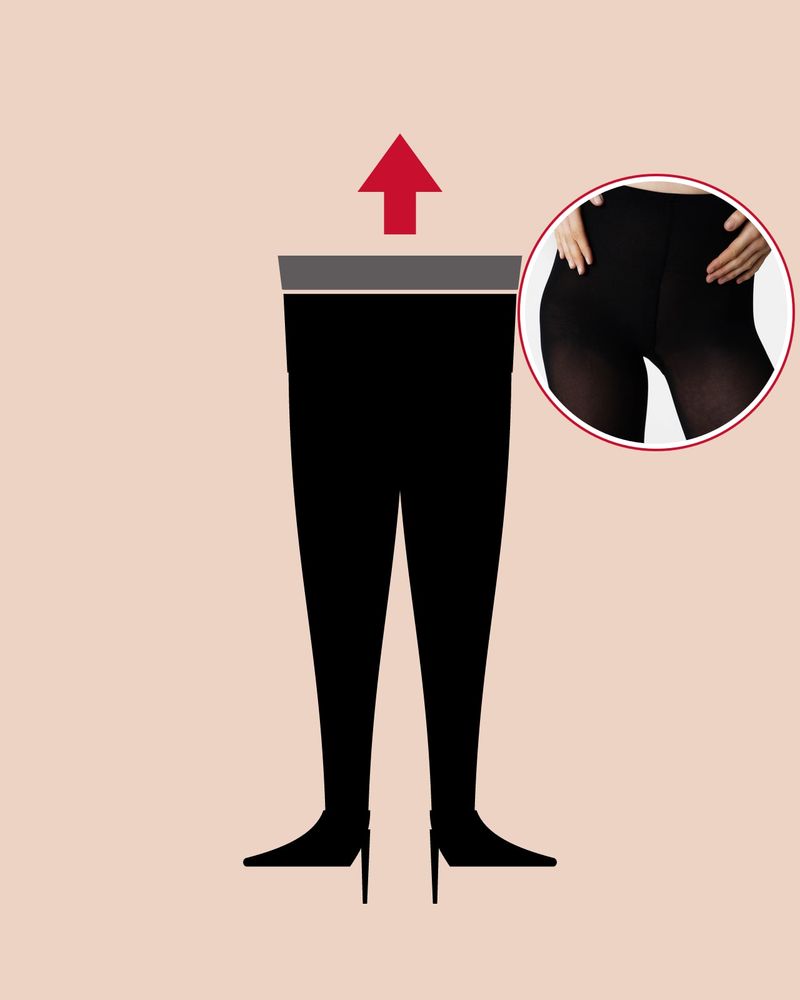
A wide band spreads the pressure over a larger area instead of cutting in, and is much less likely to fold. Look for words like "comfort waistband", "soft and broad waistband" or a height in centimetres or inches: Swedish Stockings' Olivia, 60 denier, has a comfort waistband; Sheertex sells its Classic Sheer tights with a 4-inch waistband as one of two options.
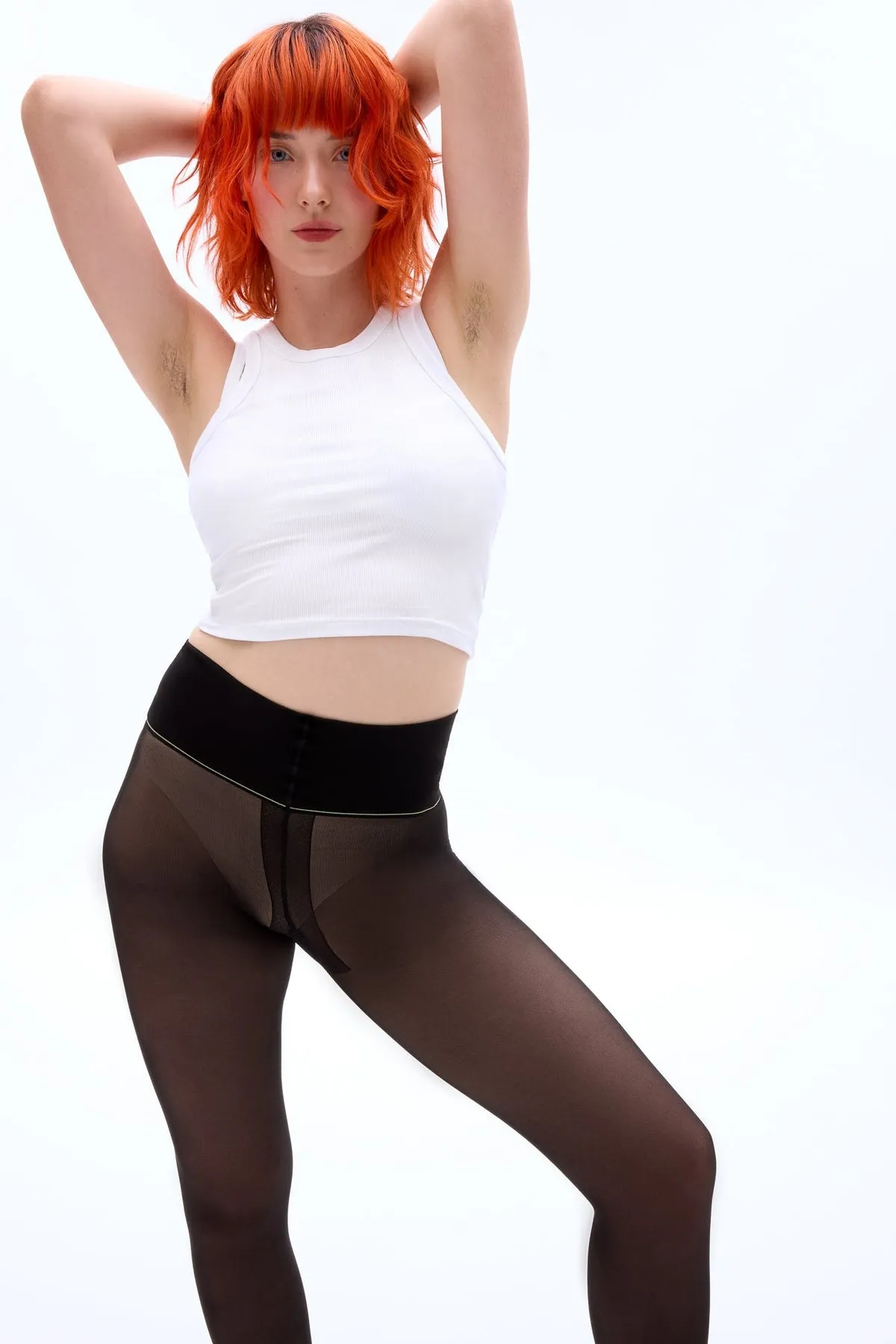
A 4-inch waistband: it holds by area, not by squeezing. Photo: Sheertex, Classic Sheer Rip-Resist Tights.
4. Put them on sitting down, one leg at a time
How you put tights on decides where the gusset ends up, and the gusset decides whether the waistband stays put. Hunkemöller's method: take off rings and bracelets, gather one leg down to the toe, slide in the tip of your foot and pull the tights over the heel, then the other foot; bring them up over the knees, and only then over the hips and waist. Sitting down makes it easier and more even. Commando suggests working them up while smoothing the fabric as you go, so no tension builds up in one place.
5. Get the gusset right before the waistband
This is the step almost everyone skips. Heist notes that you sometimes have to "pull them up really high for the gusset to be in the right place". Ease the panty section up a little at a time from the thighs, until the gusset sits right at the crotch. Only then settle the waistband. If you do it the other way round, the waistband is already at your waist while the body is still low, and within an hour it will be pulled down.
6. Check where the waistband sits
According to Heist, depending on the style the waistband should sit "on, or an inch or so above, your navel". If it is much lower, on the hips, it sits on the softest point of the belly and moves every time you sit. If it comes up near your chest, the tights are probably too big. Before you go out, Commando suggests a final check: tug gently and make sure the band lies flat against the skin, with no gathers.
7. Keep it flat underneath, and hold it from above
Bulky or high-cut knickers with thick elastic push the waistband out of place: choose flat, seamless underwear, or none if the tights have a cotton gusset. From the outside, anything that sits at the waist and rests on the band helps hold it: a high-waisted skirt or trousers, a pair of high-waisted briefs or slip shorts worn over the tights.
8. Look after the elastic, and know when to stop
Heat is the enemy of elastane. Wash tights cold or at 30°C, in a bag, and never put them in the tumble dryer unless the label allows it, as we explain in our guide on how to wash tights. And when a pair that used to fit starts to slip despite everything, it is not a fault in the size: the elastic is spent and it is time for a new one.
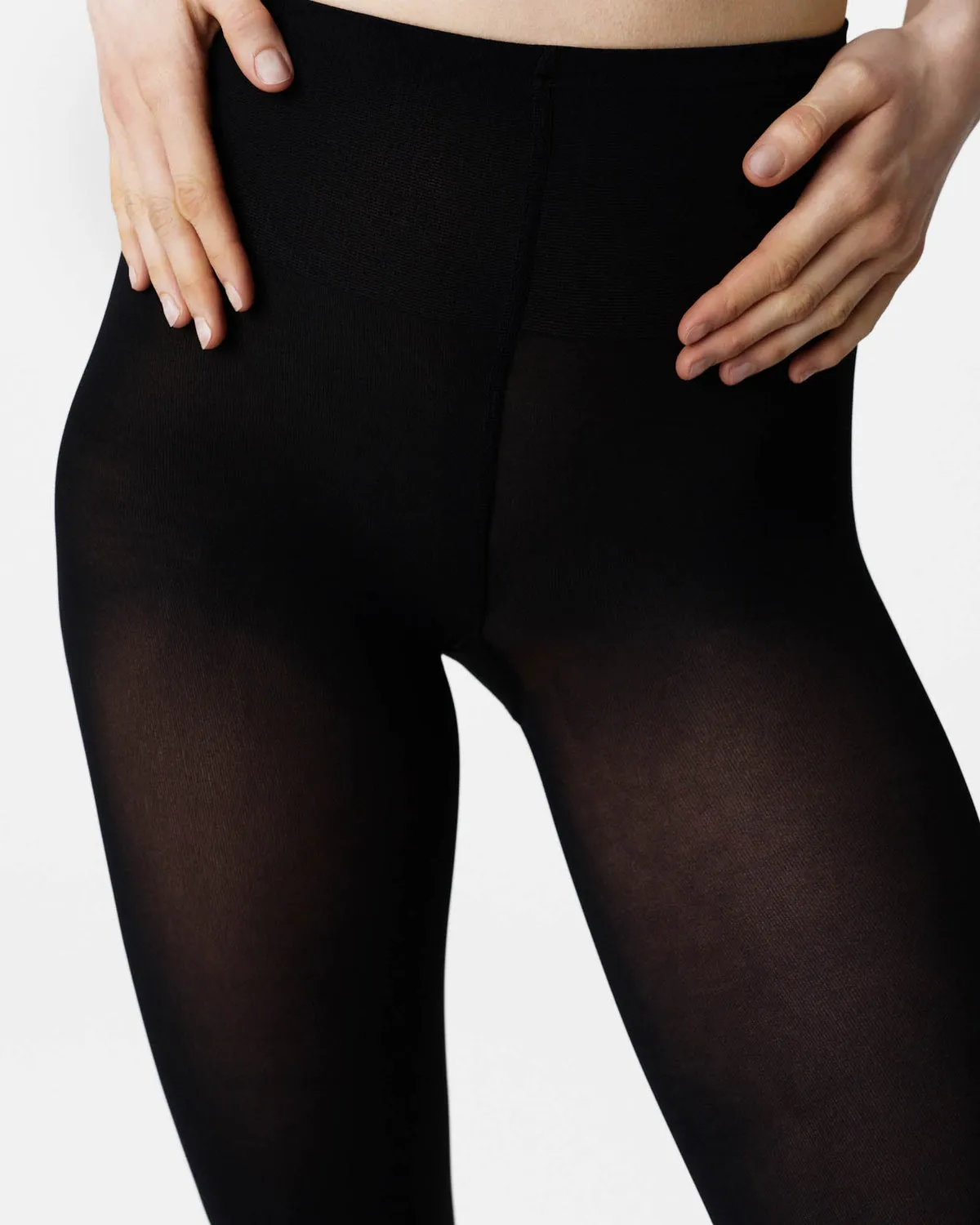
A waistband that lies flat, at the natural waist, with the gusset in place. Photo: Swedish Stockings, Olivia Premium Tights.
What does not work
- Pulling the waistband higher. If the body is short, pulling from the top just moves the tension to the crotch and the waistband comes down again.
- Sizing down to feel more held in. It is the most common reason why control-top tights roll.
- Folding the waistband over. A double fold is thicker and tighter, and rolls even faster.
The bottom line
Tights that roll down are almost always telling you something about the size: a short body or a tight waistband means size up, a loose waistband and bunched ankles mean size down. Put them on sitting down, gusset first and waistband last, choose a wide, soft band, and treat the elastic gently. To understand what each part of the pair does, from waistband to toe, read our anatomy of tights.
Frequently asked questions
Why do my tights keep rolling down at the waist?
Usually for one of three reasons: the tights are too short in the body and pull the waistband down from the crotch, the waistband is too tight and folds over when you sit or move, or the elastic is worn out. Bulky underwear underneath and very sheer, low-denier fabrics make it worse.
Should I size up or down if my tights roll down?
It depends on the symptom. If the waistband digs in and folds over, or the gusset sits low between your thighs, size up. If the waistband slides down loosely and there is excess fabric bunching at the ankles, size down. If you are between sizes, most brands, including Snag and Falke, advise the larger one.
Where should the waistband of tights sit?
On the natural waist or slightly above the navel, depending on the style. Heist puts it at 'on, or an inch or so above, your navel'. If it sits much higher, near the chest, the tights are probably too big.
How do you put tights on so they stay up?
Sit down, gather one leg down to the toe, slide the foot in and work the fabric up the leg a little at a time, then repeat with the other leg. Ease the panty section up until the gusset sits right at the crotch, then smooth the waistband flat all the way round.
Do control-top tights roll down more?
They can, if you take a size smaller to feel more held in. A firmer panty section with a narrow, tight waistband is more likely to fold over. Choose your usual size and look for a wide, soft waistband.