London Fashion Week SS27: shorts over tights and the return of the Noughties
Six London shows brought back shorts over tights and pop socks. From Mary Quant to the student parties of 2009, the story and the how-to of a silhouette that never really left.
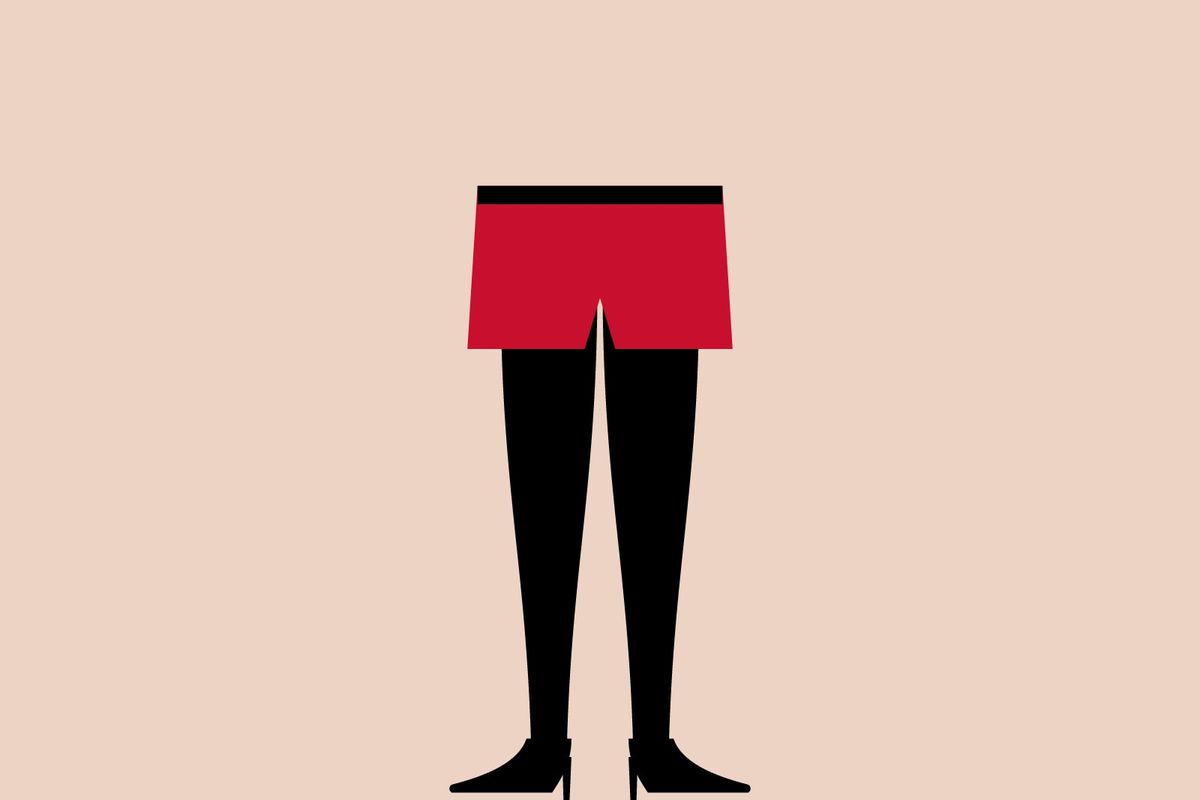
Around the end of the Noughties it was practically a uniform: micro shorts, black opaque tights, a band T-shirt, ankle boots. Then it retreated into the photo albums of student parties, the kind you now scroll through with equal parts affection and horror. At London Fashion Week, which ran from 17 to 21 September with the spring/summer 2027 collections, that silhouette walked back onto the runway: shorts worn over tights, sometimes over pop socks, reworked six different ways by six different designers. This is not pure nostalgia, and it was not a one-off reference. It is a sign that the dressed leg is back at the centre of the conversation.
Six shows, one silhouette
The line-up comes from Marie Claire Nigeria's trend report by Ashim Ojeh: Mithridate, Oscar Ouyang, Fashion East, Chopova Lowena, Aaron Esh and Yuhan Wang. The report describes a youthful, preppy, slightly edgy aesthetic drawn from the 90s and 2000s, with shorts over tights and pop socks cropping up from show to show in different colours, proportions and fabrics, right down to the most delicate of laces, Chantilly.
Look more closely at the individual collections and it becomes clear why this piece, and why now.
- Yuhan Wang imagined the bedroom as a battleground between composure and desire. WWD's review by Tianwei Zhang describes dresses and skirts spliced with actual knicker and drawers constructions, layers of lace briefs collapsed into single garments, and lace stockings: clothes that looked "caught somewhere between getting dressed and getting undressed", as Wang put it backstage. According to Marie Claire Nigeria, lace pop socks and tights were woven into the styling.
- Oscar Ouyang, the London-based Chinese designer known for dense, crafty knits, showed at the old Rochelle School in Shoreditch with a collection about that phase between teenager and adult when you raid your parents' wardrobe to dress up for a big night out. WWD notes puffed-out running shorts, metallic tassels and crochet inspired by Irish lace. Lennon Gallagher closed the show to Blur's "Girls and Boys".
- Aaron Esh, who built his label on tailoring in black, grey, white and navy, discovered colour at Camden's Electric Ballroom. He told AnOther he wanted clothes with "the attitude of listening to really, really loud music. And snogging someone." On the runway, too: crocodile-effect leggings made from individually cut pieces of leather, embroidered together.
- Chopova Lowena, showing in a bowling alley, sent out boxer shorts, striped leggings and what 10 Magazine called "chintzy tights".
- Mithridate, the Guangzhou-based label designed by Daniel Fletcher, opened the week by imagining Princess Diana bumping into club icon Princess Julia on the way to the Blitz, the legendary 80s nightclub.
- Fashion East, the platform that has launched so many of London's new names, showed four designers (Mé Mé, Jacek Gleba, Goyagoma by Traicelene Pratt and Louis Mayhew) in a skate space, amid tulle, lace cut-outs and bright embroidery.
What ties them together is not a specific revival. It is an age: the one where you dress by borrowing, mixing grown-ups' clothes with your own, lingerie with sportswear.
From Mary Quant to the parties of 2009
That shorts over tights read as a "young" look is no accident. Tights themselves were born a generational garment. As the V&A explains, before the 1960s most women wore stockings in "American Tan", held up by garters or suspender belts with metal clips: uncomfortable, and fundamentally incompatible with a skirt above the knee, which would have shown the lot. Coloured tights were on sale at Marks & Spencer by autumn 1963, but in 1966 they still cost 12 shillings a pair, around three times the price of stockings.
The turning point was Mary Quant, who worked with the Nylon Hosiery Company on tights dyed mustard yellow, ginger, prune and black. In 1973 the Sunday Times wrote that while Quant hadn't invented fashion tights, "she was the reason most women wore them". By the 1970s tights were outselling stockings. The miniskirt and the tight are, in effect, the same invention seen from two sides: without the second, you couldn't dance in the first.
Forty years later the same logic produced shorts over tights. Grazia, in a 2018 piece, remembered micro shorts and tights worn to university parties in the depths of winter, with band T-shirts and a "MySpace fringe", and described how Alexa Chung had brought them back at Paris Fashion Week in grown-up form: micro leather shorts, low-denier tights, booties and a cashmere jumper in warm oatmeal. That is the difference between quoting an era and re-enacting it, and it is exactly what separates September's runways from Noughties fancy dress.
The Chantilly lace detail
Among the fabrics named for SS27, one says a great deal. Chantilly, explains the Fashion Institute of Technology's Fashion History Timeline, is a bobbin lace established in the 17th century in Chantilly, near Paris, recognisable by its fine ground, outlined pattern and abundant detail, and traditionally worked in black silk. Napoleon decreed it one of only two laces allowed at court, black Chantilly shawls were everywhere by the mid-19th century, and machine production eventually made it affordable in the early 1900s.
For centuries, then, it was the stuff of evening and of lingerie. Setting it beside a pair of shorts and some tights changes its register entirely: this is not the composed femininity of a long gown but that of someone who opens her grandmother's drawer and finds something to wear on Saturday night. It is, once again, the Oscar Ouyang gesture, the teenager in borrowed clothes.
How to wear it now
The trend is officially for spring 2027, but shorts over tights make most sense right now, when bare legs are no longer an option. A few practical pointers:
- Start with proportion. Tailored Bermudas or knee-length shorts are the easiest and most grown-up way in. Very short shorts need an opaque tight, or the whole thing tips off balance.
- Choose your denier by message. A 15–20 denier sheer in black or nude is the Alexa Chung version, more polished. An opaque of 60 denier and up turns graphic and properly wintry, closer to those 2009 parties.
- One piece of lace. If you want to nod to the runway's Chantilly, let it be the only worked element: lace tights or lace socks, everything else plain.
- Pop socks with intent. A pop sock over a tight only works when it is obviously deliberate: in a contrasting colour, or with a lace trim on show.
- Shoes set the age of the look. Ballet flats, loafers and Mary Janes keep it youthful; a calf boot or a lace-up boot pushes it towards winter and a more grown-up crowd.
- What goes on top matters. Alexa Chung's cashmere jumper is the lesson here: a good knit or a proper coat strips the shorts of any school-trip air.
A leg with something to say again
London Fashion Week did not invent anything, and that was never the point. It took a street habit, pulling a pair of tights on under your shorts to go out in October, and treated it as runway material, with grandmother's lace and crocodile leggings thrown in. Sixty years ago, tights let young women shorten their skirts. Today they let shorts outlive the summer. For anyone who loves hosiery, that is good news: next spring, a dressed leg won't be a concession to the weather but a statement of style.