The Empress and The Hunchback: what 19th-century stockings were really like
As The Empress returns on 12 November and The Hunchback, Soul of Paris arrives on 27 November, museum pieces show what women wore on their legs in Sisi's Vienna and in 1830 Paris.
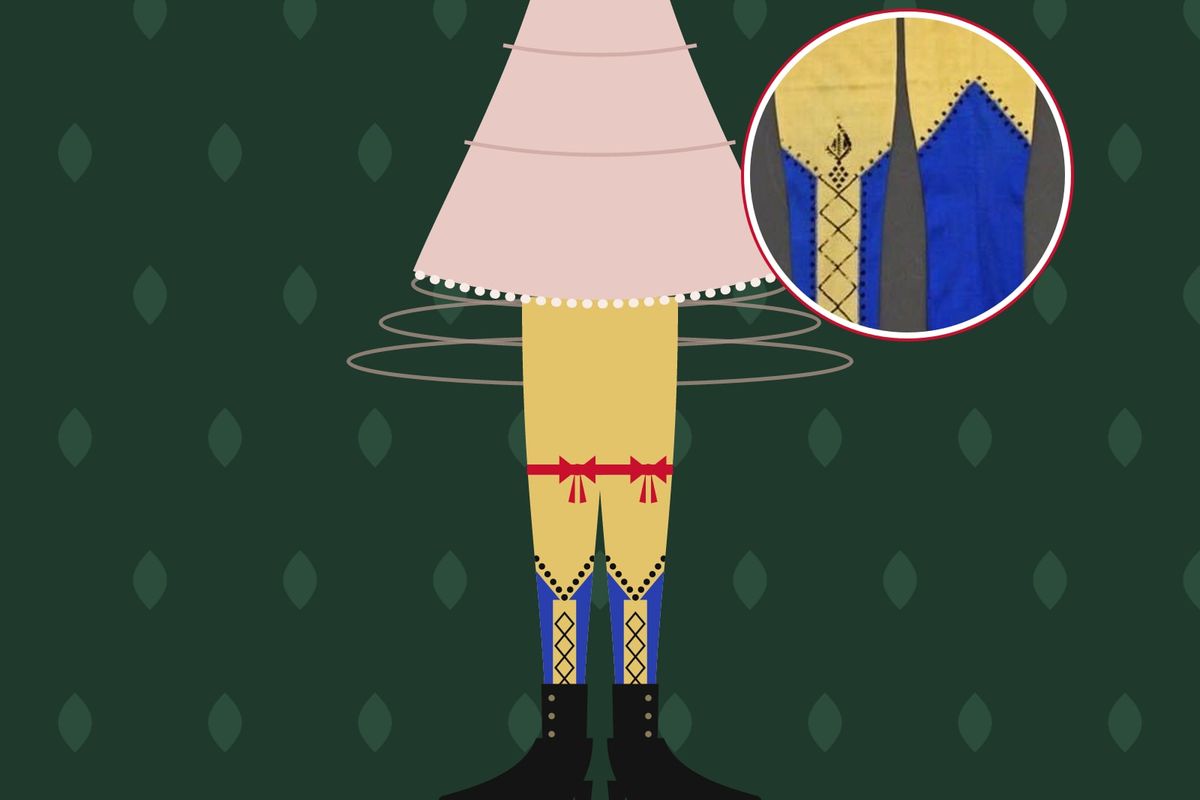
Yellow silk to mid-calf, then royal blue down to the toes, with a black lattice climbing the ankle like a ladder of stitches. The pair was knitted in France in 1865 and is now at the Metropolitan Museum of Art in New York. It is a useful image to keep in mind this month, when Netflix brings back two 19th centuries at once: Sisi's Vienna in the third and final season of The Empress, out on 12 November, and Paris in 1830 in The Hunchback, Soul of Paris, from 27 November. On screen, legs barely show. In museum stores, the stockings tell a story of their own: silk and wool, clocks and garters, and colours that a war had just named.
The two November releases
The Empress (in German Die Kaiserin) closes with season 3. According to Netflix's press release of 7 October 2026, Franz returns traumatised from the Sardinian War, Elisabeth tries to save the marriage and then leaves Vienna for an island to recover, while Maximilian and Marie prepare for the throne of Mexico. The war in question is the one of 1859, and the real Elisabeth did leave: in the winter of 1860, Planet Wissen recalls, she sailed to Madeira to cure a cough, and a winter stay became a two-year journey. Devrim Lingnau Islamoğlu plays Elisabeth again, Philip Froissant plays Franz, and the costumes are once more by Gabriela Reumer, as Netflix's credits confirm.
The Hunchback, Soul of Paris is not a series but a French film by Jean-François Richet, with Vincent Cassel as Quasimodo and Karim Leklou, Benjamin Voisin and Daphné Patakia in the cast. What's on Netflix places it in Paris in 1830, on the eve of the July Revolution, with a cholera epidemic in the background; Richet says the film starts "from a credible premise rather than a true story".
So: 1830 for Paris, around 1860 for Vienna. Thirty years apart, the same basic garment, and a lot of change in how it was made.
What the costume designers have said (and haven't)
We looked for interviews about hosiery and found none. Of Reumer's work on The Empress, the Berlin costume house Theaterkunst, which acquired the original costumes, says that her "ideas and designs make the costumes an impressive blend of historical accuracy and modern elements". Seasons 1 and 2 can already be hired there, from crinolines to shoes; season 3 will follow after broadcast, expected from 2027. For The Hunchback, Soul of Paris we could not find the head of costume in Netflix's official material. Whatever the actors wear on their legs, then, is not credited: the history is easier to document than the set.
Silk, cotton and wool: what a stocking was
In both decades a woman's stocking was knitted, ended above the knee and had a separate foot, heel and welt (the top band). The Met's open-access collection has dozens of them. A black silk pair from the 1830s, the Paris of the film, carries white motifs embroidered up the ankle; a white French silk pair from 1846 has an openwork floral panel in the same place.
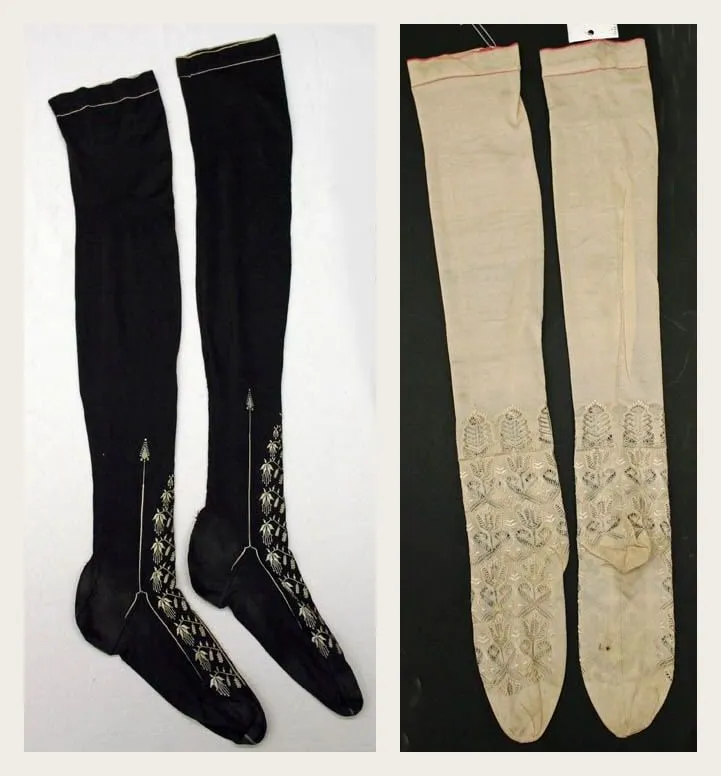
Black silk, Europe, 1830s, and white silk, France, 1846. Photos: The Metropolitan Museum of Art, Open Access (CC0).
That decorated strip has a name: the clock. The Victoria and Albert Museum, describing a black silk stocking from 1851, writes that "the addition of 'clocks' (patterns worked at the ankle) and decorative patterning in women's stockings was typical in the 19th century". Silk was for best. Cotton was for daily wear, and wool for cold, travel and the countryside, which is where hand knitting survived longest. The Met holds a pair of American wool stockings from the 1860s in a pink, green and cream plaid; the Badisches Landesmuseum Karlsruhe publishes in CC0 the "hasenhaarene Strümpfe" of a Black Forest costume, knitted from rabbit wool, with cotton heels and toes and a red stitched welt.
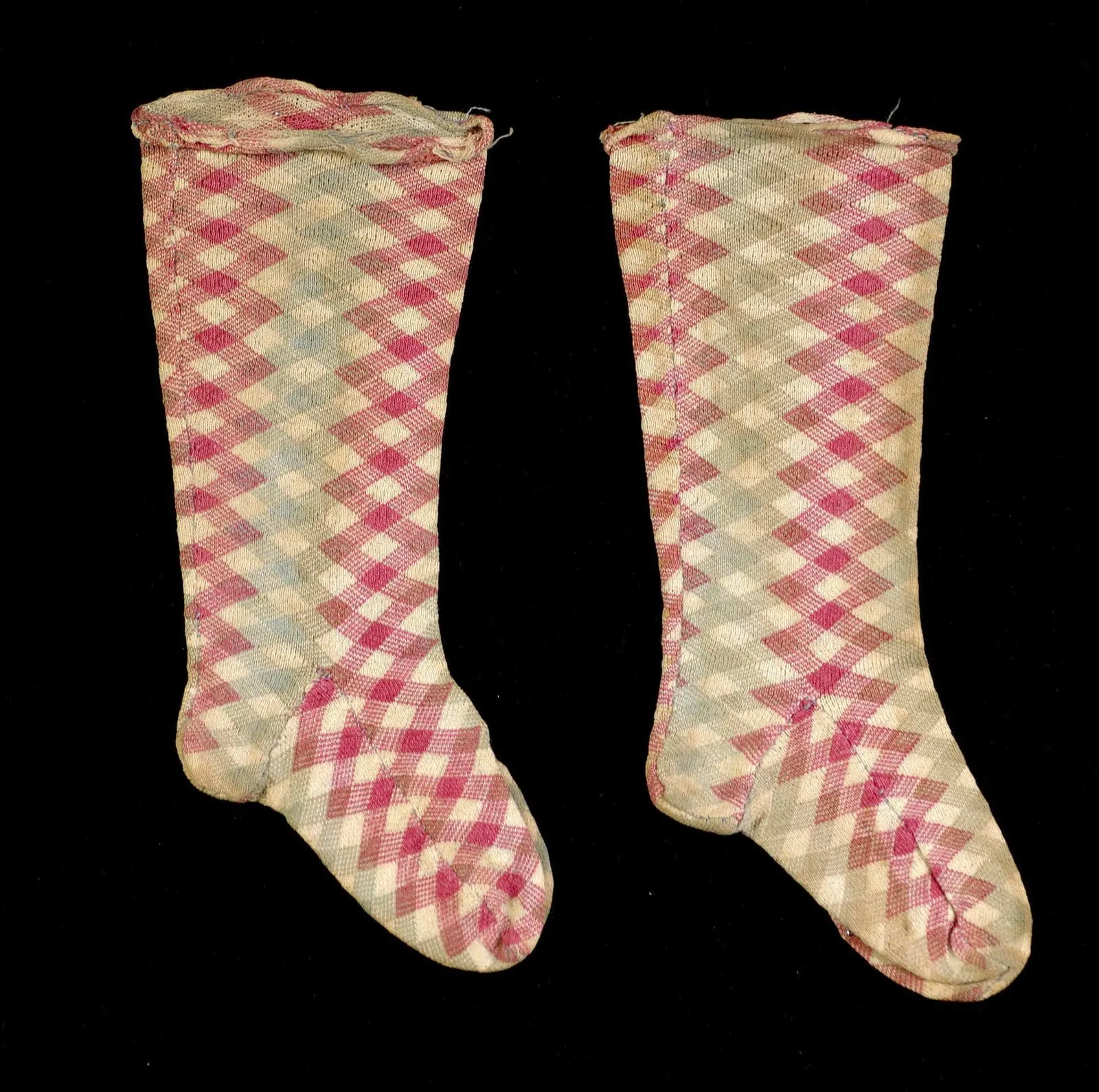
Wool stockings, United States, 1860–70. Photo: The Metropolitan Museum of Art, Open Access (CC0).
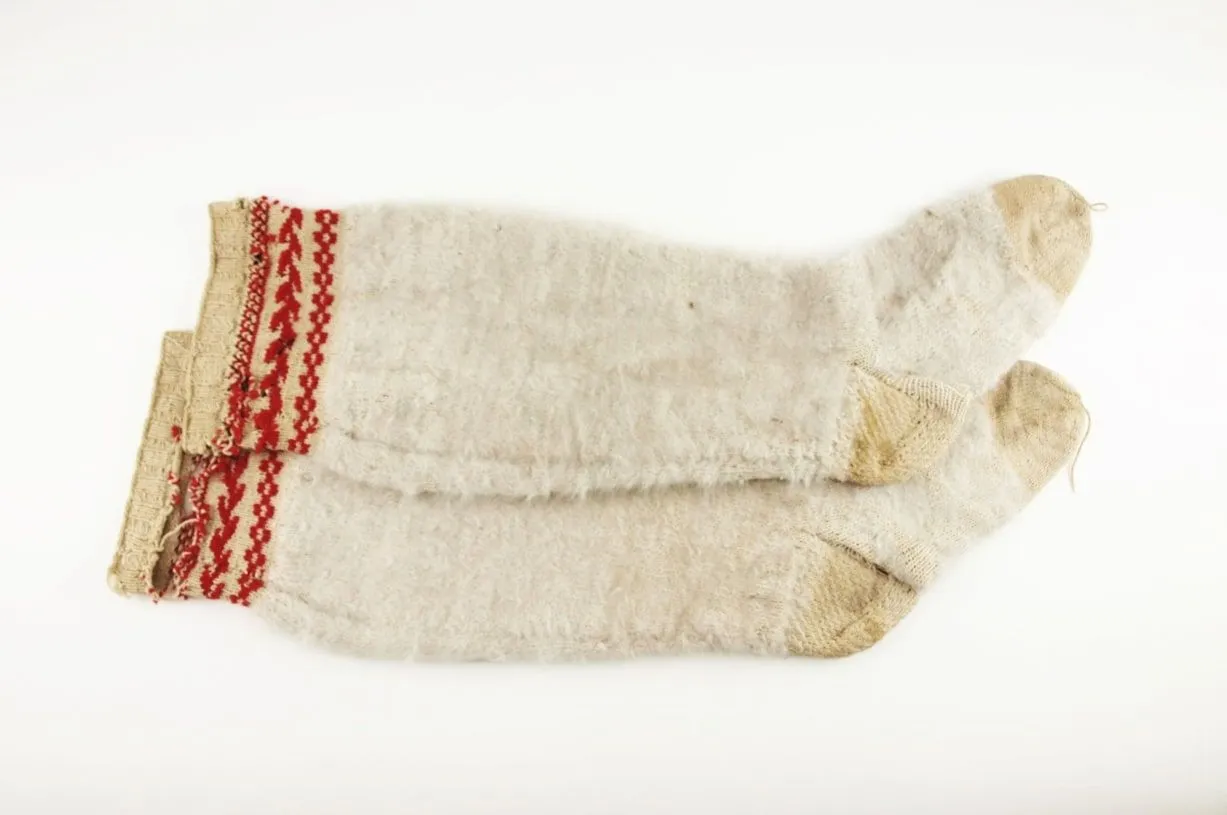
Rabbit-wool stockings from women's costume of the Simonswäldertal, Black Forest, 19th century. Photo: Badisches Landesmuseum Karlsruhe (CC0).
Hand knitting also carried names. A German cotton pair from 1837 in the Met has its initials and the year knitted into the welt with pale blue beads, above a zigzag openwork pattern: a stocking made to last, and to be recognised in the laundry.
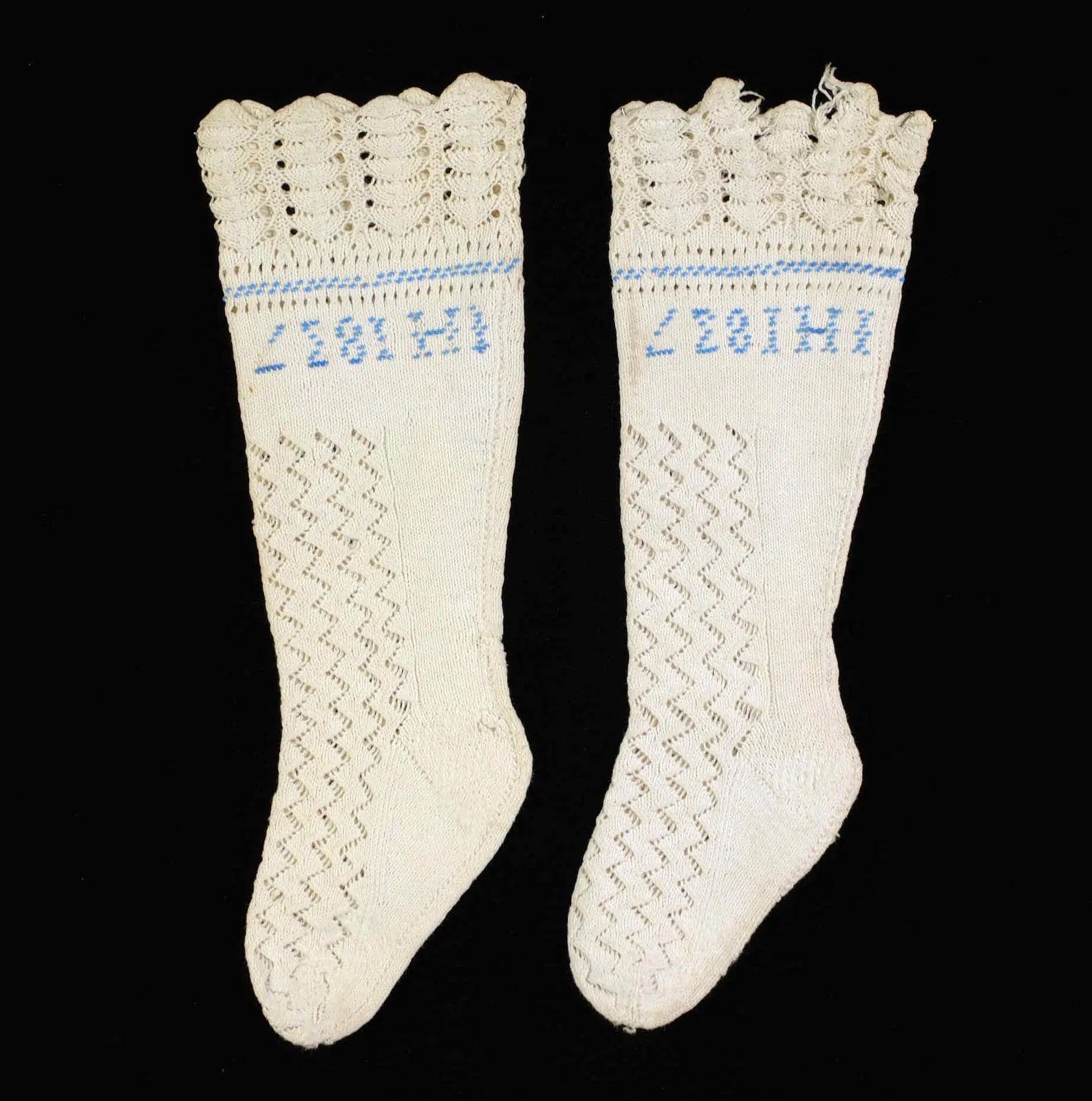
Cotton and beads, Germany, 1837. Photo: The Metropolitan Museum of Art, Open Access (CC0).
Who made them
Between the Paris of the film and the Vienna of the series, stocking-making became an industry. In Troyes, according to the guide of the town's Musée de la Maille, a man named Delarothière invented an automatic narrowing mechanism in 1830, which meant stockings no longer had to be shaped by hand; the first circular knitting frame appeared around 1825 and became widespread around 1860–70 (the circular knitting machine is the ancestor of the ones that knit tights today). In Britain the jury of the 1851 Great Exhibition, quoted by the V&A, counted 50,000 stocking frames in the hosiery trade, but noted that Britain lagged behind the United States and Germany in applying steam power to them. In Saxony, Limbach was the Esche family's town: Johann Esche built a silk-stocking factory there in 1719, and the factory Reinhold Esche built in 1854, now the Esche-Museum, employed about 110 workers in 1860, ERIH records, with many more working from home.
The silk pairs closest to the years of the series are French. The Met has three from 1865: one in yellow and royal blue, one in teal with a lighter clock, one in black dotted with purple.
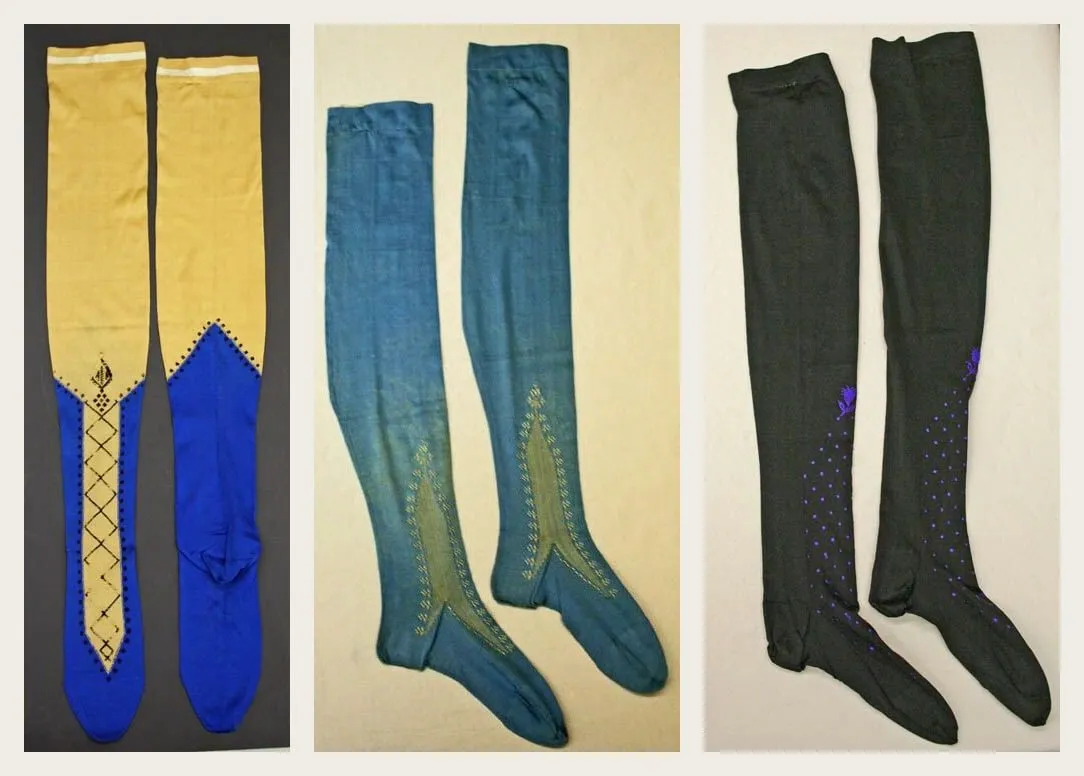
Three pairs of French silk stockings, 1865. Photos: The Metropolitan Museum of Art, Open Access (CC0).
Colours, and a battle
White and black dominate the earlier pieces. Then chemistry changed the palette. In 1856 William Perkin discovered mauve, the first famous artificial colour, and by about 1860, as the Fashion History Timeline of the Fashion Institute of Technology summarises, aniline dyes were widely available. One of them, fuchsine, patented in Lyon in April 1859, was then "christened magenta, to commemorate the 1859 Battle of Magenta", the Royal Society of Chemistry recounts: the battle in which the Austrians were defeated by the Franco-Sardinian alliance. The same war with which The Empress opens its last season. In 1862 Nathaniel Corah & Son of Leicester made a pair of magenta wool stockings with white silk flowers for London's International Exhibition. We do not know which dyes coloured the Met's 1865 pairs, but they belong to exactly those years.
How they stayed up
There was no elastic waistband and no suspender belt. Stockings were held "above or below the knee, with garters", as the V&A's exhibition Undressed explained (in the words of a review for the British Society for Eighteenth-Century Studies). A garter could be a ribbon tied around the leg or a knitted band, like the one from 1833 in the Met: a narrow strip of cotton with a loop at one end.
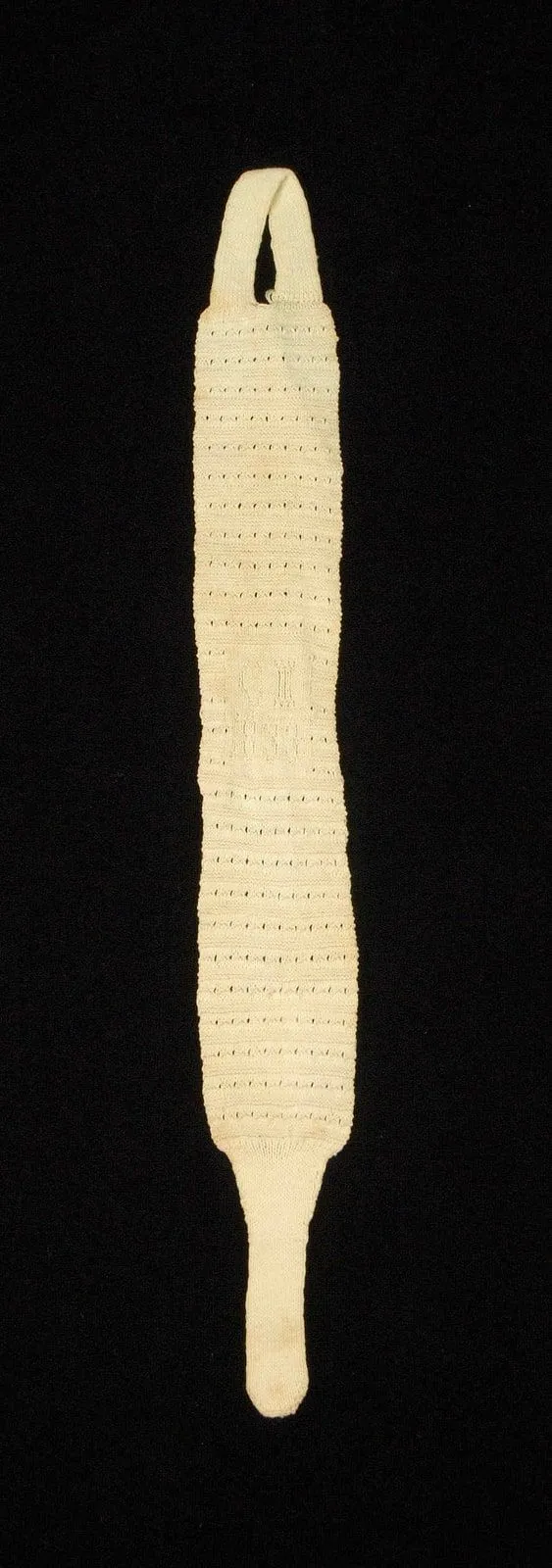
Knitted cotton garter, United States, 1833. Photo: The Metropolitan Museum of Art, Open Access (CC0).
Suspenders came later. "By the 1880s", the sociologist Dana Wilson-Kovacs wrote in The Conversation, suspenders, "at first attached to a belt worn over the corset and later onto the corset itself", were championed by the National Health Society as a replacement for constricting garters. In 1830 Paris and in Sisi's Vienna around 1860, then, stockings were still held up with garters.
Under the crinoline
Did anyone see these stockings? Rarely, and that is the point. The cage crinoline, the V&A explains in its gallery label for a Thomson model, appeared in 1857, and its sway "revealed glimpses of ankles and petticoat hems": "a glimpse of stocking or an ankle was quite a revelation for onlookers". The clock at the ankle was made for that glimpse.
As for Sisi herself, little survives and almost none of it on show. In 2013 the curator Olivia Lichtscheidl presented items from the Empress's wardrobe at the Sisi Museum in Vienna's Hofburg, including her underwear, "stockings, chemises and culottes", Vienna.at reported, and mentioned a riding pair of stocking-trousers kept in storage and never displayed. In 2021 the auction house Hermann Historica, near Munich, sold for 3,800 euros a set of her summer underwear from the 1870s–80s with "a pair of long cotton stockings" marked "E.S.", according to Blick. Cotton, not silk, at least for summer. The Sisi Museum itself reopens on 19 November after its redesign, with new rooms, as the museum's website announces.
Wearing the 19th century now
- Choose stockings, not tights. The whole period is about separate legs: a hold-up or a stocking with a suspender belt gets closer than any pair of tights.
- Look for a clock or a pattern at the ankle. It is the most "period" detail and it reads well under a midi skirt.
- Silk for evening, wool for day. Reproduction silk stockings exist (the ones in the box are 70 per cent silk); for daily wear, a fine merino or cotton blend does the job of 1860s wool.
- Off-white rather than nude. Most museum pairs are white or ivory, or deep colours: nude as we know it did not exist.
- Two-tone works. Yellow and blue in 1865 is a reminder that contrast at the foot is not a modern idea.
When Elisabeth climbs into a carriage on screen this week, the camera will stay on her face. Under the skirt, if the costume is faithful, there is a silk stocking with a clock at the ankle and a garter just above the knee.
The photos
The stockings and the garter are from The Metropolitan Museum of Art (Open Access, CC0) and the Badisches Landesmuseum Karlsruhe (CC0, via Europeana); the posters of the two titles are Netflix Germany's official Instagram posts. Full credits and links are in the photo references below.
Frequently asked questions
When does The Empress season 3 come out on Netflix?
On 12 November 2026, worldwide. Netflix calls it the third and final season. The costumes are again by Gabriela Reumer, according to the credits in Netflix's press release of 7 October 2026.
Is The Hunchback, Soul of Paris a series or a film?
A film. Jean-François Richet's French feature, with Vincent Cassel as Quasimodo, arrives on Netflix on 27 November 2026. It is set in Paris in 1830, on the eve of the July Revolution, with a cholera epidemic in the background.
What were women's stockings made of in the 19th century?
Silk for best, cotton for every day, wool for cold and for the countryside. Museum pairs from the 1830s to the 1860s at the Met and the V&A are knitted, reach above the knee and often carry a 'clock', a pattern worked at the ankle.
How did women keep their stockings up before suspenders?
With garters, tied or buckled above or below the knee. Suspenders, first on a belt worn over the corset and then on the corset itself, spread only in the 1880s.