Bio-based yarns, AI and 2027 trends: inside Legwear Innovation Day
Around 150 hosiery firms met in Castel Goffredo in late October: a 100% bio-based yarn, corn-based LYCRA, artificial intelligence according to PwC and four trends for 2027/28.
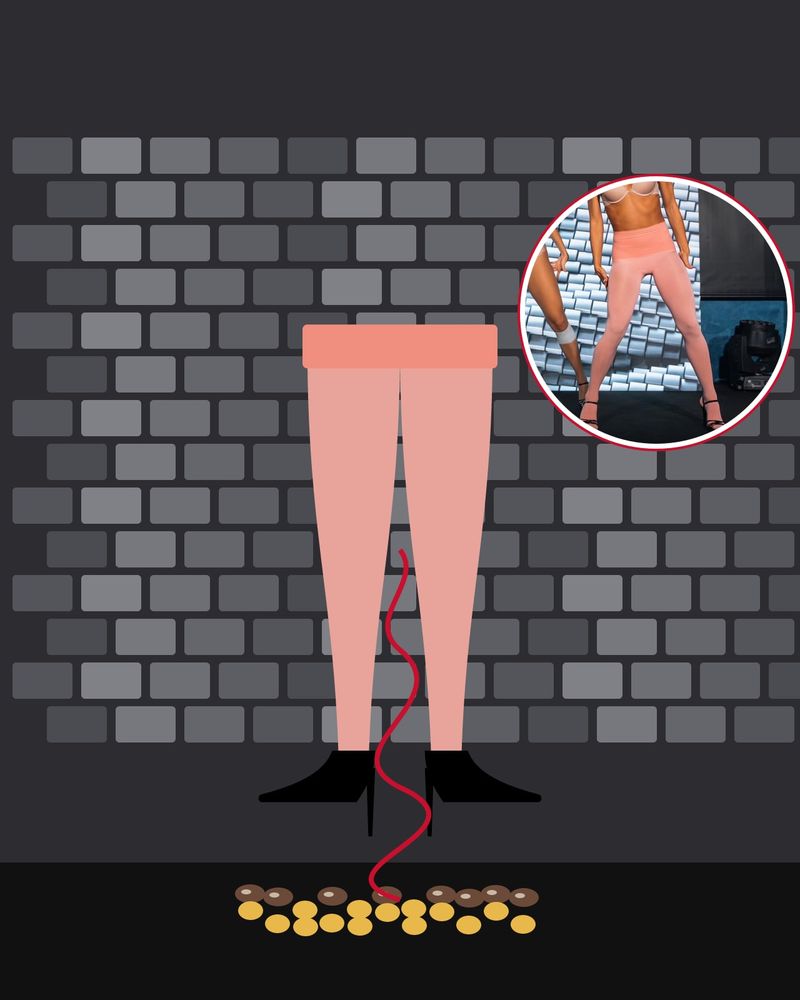
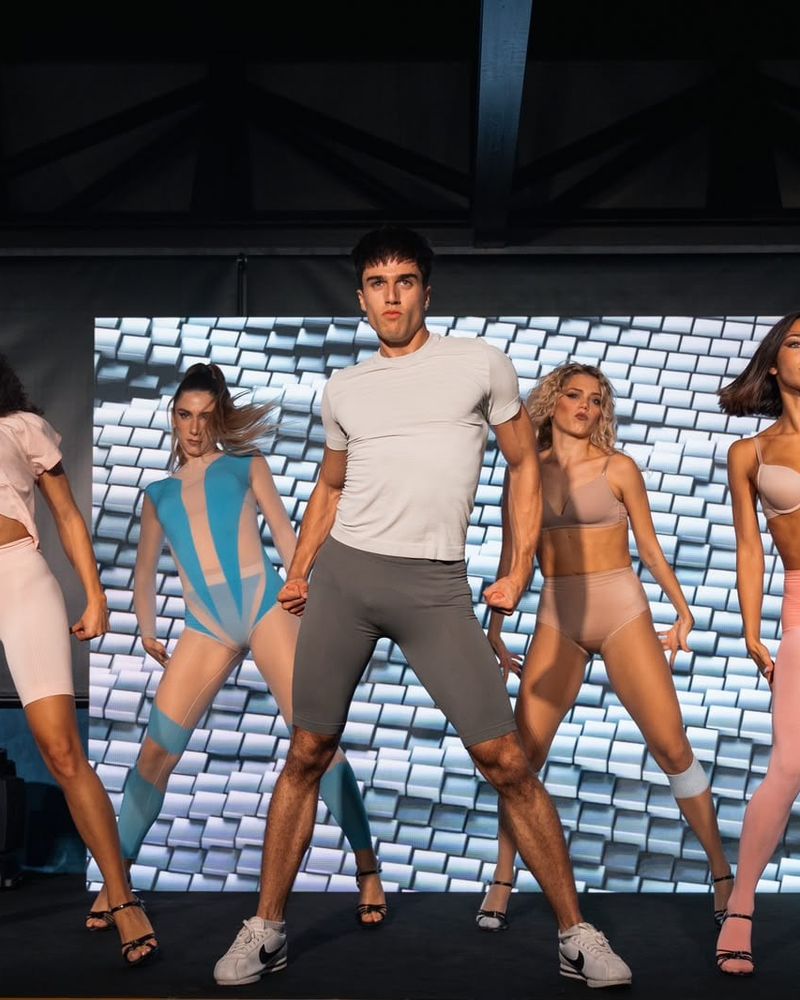
Five dancers in front of an LED wall, wearing garments that are not on sale yet: that was the most photographed moment of Legwear Innovation Day 2026. The rest was more technical and, for anyone following sustainable hosiery, more interesting. In late October The LYCRA Company and Fulgar brought around 150 representatives of hosiery companies to Castel Goffredo, the hosiery district near Mantua in northern Italy, to talk about plant-based yarns, artificial intelligence and the trends for the 2027/2028 season. We read the trade press reports to find out what was actually said, and what it changes, or will change, on the label of a pair of tights.
The event: who was there
The event was held at the Fulgar Event Space in Castel Goffredo. Knitting Industry, which reported on it on 2 November, counted "nearly 150" representatives; Knitting Trade Journal says "more than 150". Neither gives the exact day: Knitting Industry says it was held "last week".
It is a fixture on the district's calendar. Last year, on 7 October 2025, Fulgar also counted nearly 150 guests, and The LYCRA Company used the occasion to announce the first garments made with its bio-derived fibre. This year the programme was opened by Ettore Manfrotto, Account Manager Brand & Retail at LYCRA, and Alice Sperindio, EMEA Legwear Sales Manager.
EVO: a yarn made entirely from plants
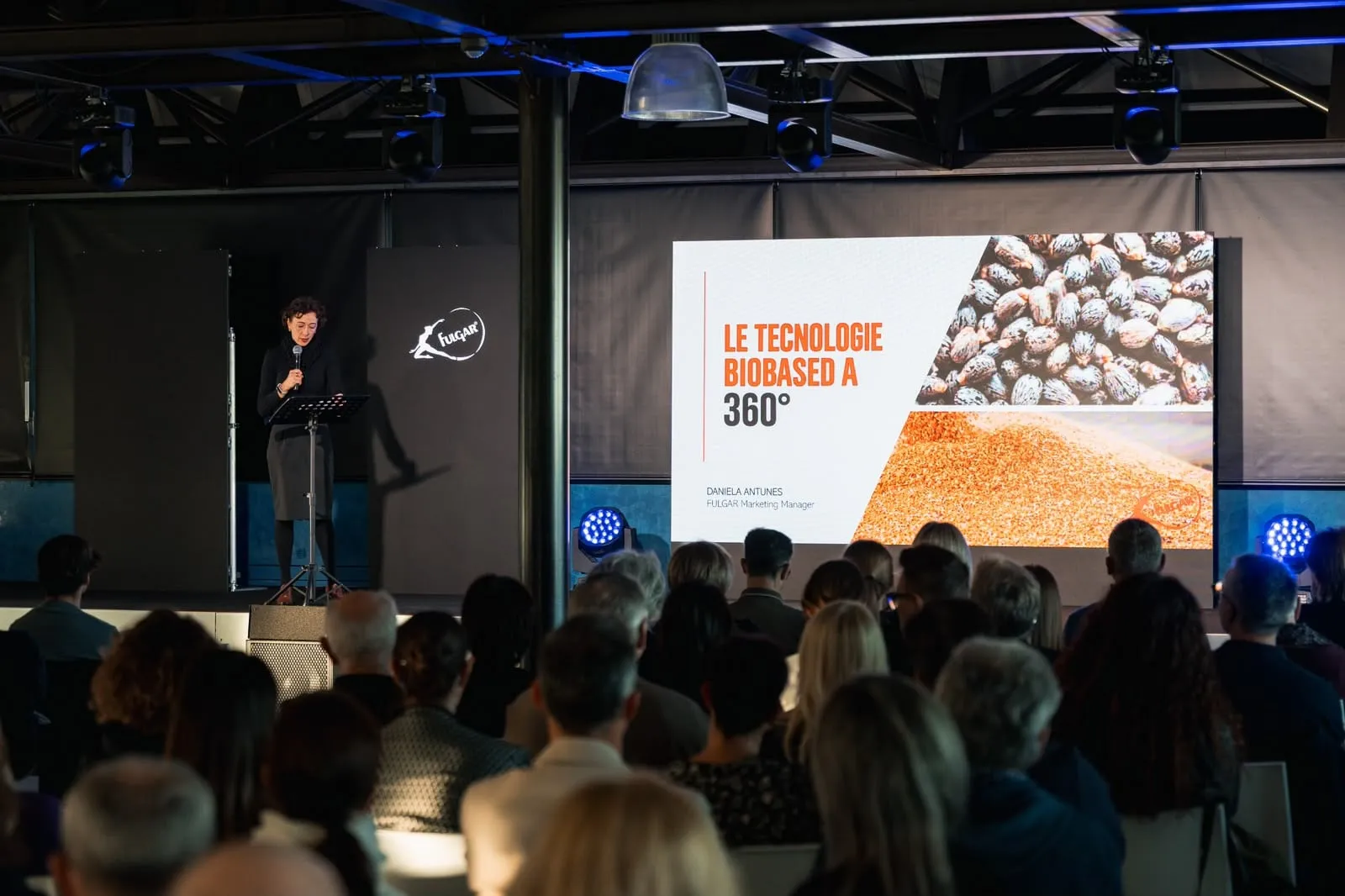
Daniela Antunes, Fulgar's Marketing Manager, presenting "bio-based technologies at 360°": on screen, the castor seeds and corn the yarns start from. Photo: Fulgar.
The materials session was led by Daniela Antunes, Marketing Manager at Fulgar. The first yarn she presented was EVO by Fulgar, a polyamide (the nylon in tights) that is 100% bio-based: no fossil raw materials at all. It comes from two plants, castor and industrial corn not intended for human consumption. Castor, Fulgar says, grows in arid regions on poor soil, where it does not take land from food crops. The sources disagree on the split: Knitting Industry says "equal proportions", while Fulgar's own yarn page says more than half of the raw material comes from castor.
On the same page Fulgar gives EVO a moisture absorption of 1.6%, against 4% for conventional polyamide 6.6, so a yarn that dries faster, and a bio-based content certification under the ASTM D6866 standard.
LYCRA made from corn
The second material was renewable LYCRA fibre, the bio-derived version of LYCRA EcoMade: an elastane with 70% of its content derived from industrial corn. According to LYCRA, it can cut the fibre's carbon footprint by "up to 45%" compared with conventional, fossil-based LYCRA fibre. Two caveats, the same ones we noted for Oroblù: "up to" is a maximum, and the comparison is about the fibre, not the finished pair of tights.
In tights, elastane is the smaller share: 6% in Oroblù's pair, 15% in Heist's satin tights. That is why it matters that both materials arrive together: most of a pair is nylon, and tights with genuinely less fossil content need both. What these fibres are and how to read them on a label: what tights are made of.
LYCRA also showed two less glamorous ideas. Alberto Ceria, Technical Product Manager, introduced Coolmax CloakFX, a fibre that masks sweat marks on fabric, in the session on seamless garments; Daniele Maggi, Italy & South Europe Sales Manager, talked about workwear, where durability, stretch and size inclusivity matter.
AI, according to PwC
The talk furthest from the yarn was by Stefano Spiniello, a partner at PwC Italy, titled "The Future of Legwear & Seamless Lies in AI". The applications listed by Knitting Industry cover the whole supply chain: product development, demand forecasting, manufacturing, quality control, logistics and customer experience. Spiniello's main point: AI only works with good data management, integrated processes, a trained workforce and clear governance. No specific company projects were announced.
Four trends for 2027/2028
The trend directions were developed by Amsterdam's Stijlinstituut with The LYCRA Company and have four names: Spark Glam, Give Strength, Touch Origins and Find Clarity. Knitting Industry calls them "distinct aesthetic perspectives" for hosiery collections in 2027/2028. Beyond the names, though, no descriptions of colours, yarns or styles have been published, and we found no LYCRA or Fulgar press release explaining them: we will cover them when they are public, rather than guessing from the titles.
What we do know is how they were shown: a dance performance with five dancers, concept garments made in LYCRA's laboratories and animated LED backdrops, with technical commentary by Davide Rossi of LYCRA's technical sales support team. Fulgar's photo shows high-waisted pink opaque tights, sheer legs under a blue bodysuit and blush cycling shorts. Last year the four themes were occasions, Work-School, Sport, Chill and Going Out; this year's names read more like moods than moments of the day, but that is our interpretation.
Who already uses these yarns
This is worth being precise about, because years can pass between a yarn being presented and a pair of tights reaching the shop.
- Oroblù is the clearest case. Its Bio-Derived Sneakers Tights combine Fulgar's Q-GEO nylon, with 46% bio-derived content, and LYCRA EcoMade at 70% bio-derived. It is not EVO, but it is the same idea: corn instead of part of the oil.
- EVO has a few precedents in hosiery: Knitting Industry reported in 2021 on two styles from Gambettes Box, the French subscription brand, one with polka dots and one with a mini-diamond pattern, and in 2018 on the Celeste style in Duelegs' Tightings line. We have not checked whether they are still on sale.
- Fulgar yarns also appear in recent tights, but recycled rather than plant-based: Heist's The Heart is 79% Q-Nova, a recycled polyamide.
According to the reports, no new brands were announced as adopting EVO or renewable LYCRA.
What it means for anyone buying tights
- Read the percentages, not the adjectives. "Bio-based" means the raw material comes from plants. It does not mean biodegradable or natural: EVO and corn-based LYCRA are still synthetic fibres.
- Do the maths on the whole pair. The 70% applies only to the elastane; 100% bio-based nylon counts for far more, because nylon is most of the garment.
- Look for the yarn name. EVO, Q-GEO, LYCRA EcoMade: brands that use them usually say so on the product page. If all you see is a vague "eco", ask.
- Durability matters as much as origin. Plant-based tights that ladder on their second outing are not progress: hand wash or use a laundry bag at 30°C, and rotate your pairs, whatever the fibre.
The photos
Both event photos are by Fulgar (© Fulgar) and were distributed with the report published by Knitting Industry on 2 November 2026. We found no posts about the event on Fulgar's or LYCRA's official Instagram accounts as of 3 November.
In 1940 DuPont sold nylon stockings as a fibre made from "coal, air and water". The recipe presented in Castel Goffredo is castor oil and corn: how long it takes to reach the shelves is the next question.
Frequently asked questions
What is Legwear Innovation Day?
An annual event that The LYCRA Company runs with Fulgar in Castel Goffredo, the hosiery district near Mantua in northern Italy, for legwear manufacturers: new fibres, market news and trends for the season ahead. The 2026 edition took place in late October at the Fulgar Event Space.
What is Fulgar's EVO yarn?
A 100% bio-based polyamide (nylon), made entirely from plant raw materials: castor oil, from plants grown in arid regions that do not compete with food crops, and industrial corn not intended for human consumption.
Which tights already use plant-based yarns?
The most recent example is Oroblù's Bio-Derived Sneakers Tights, with Fulgar's Q-GEO nylon (46% bio-derived) and LYCRA EcoMade (70% bio-derived). EVO has been used in the past in tights by Gambettes Box (2021) and in Duelegs' Tightings (2018).